- Crypto Saving Expert's Newsletter
- Posts
- Crypto Saving Expert Newsletter - Issue 182
Crypto Saving Expert Newsletter - Issue 182
GM.
Things escalated quickly this week.
Global tensions are rising, energy markets are reacting, and volatility is creeping back into the system.
Meanwhile, Bitcoin is trying to push higher and test key levels.
So the big question now is simple.
Does Bitcoin trade like risk…
Or finally start behaving like digital gold?
Let’s break down the markets this week.👇
Table of Contents
Sponsored by: PrimeXBT

Markets are tense. Gold and silver are moving strongly while crypto remains range-bound.
This is why multi-asset trading matters. On PrimeXBT, you can trade gold, FX, indices, commodities, and crypto from a single account.
Exclusive community deal: 0 trading fees on the PXTrader platform - 20% trading bonus. No need to switch platforms
Sign up using the link to access this offer HERE
Bitcoin Makes A Break For It
Bitcoin is attempting to break out of consolidation and expand to the upside as it battles stern resistance.
Bitcoin
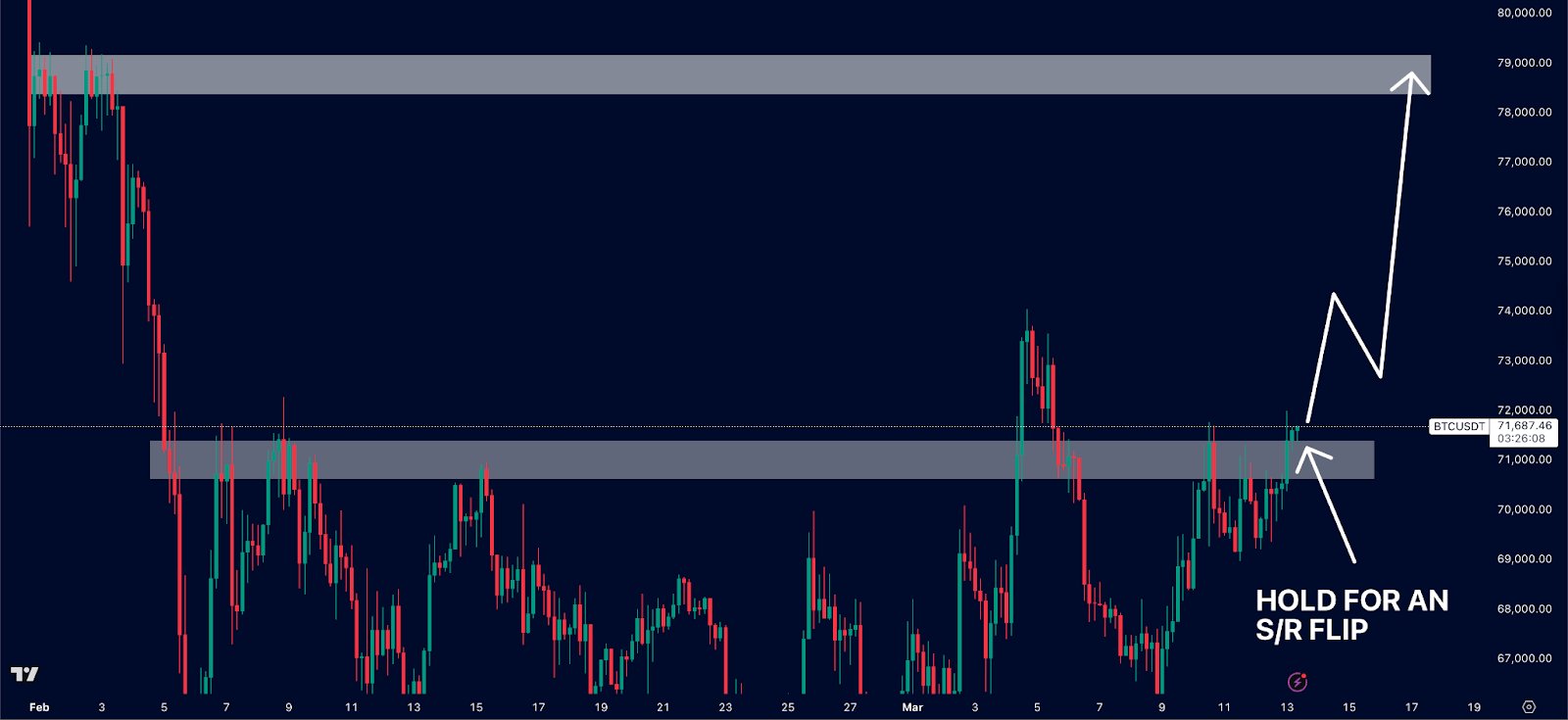
Bitcoin is attempting to flip resistance to support, something that it failed to do earlier in the month.
Thus far, bitcoin is showing all the right signs that it may finally be ready to test further upside.
If the grey box holds as support, then we could see bitcoin rally towards $79,000 next.
Market Structure
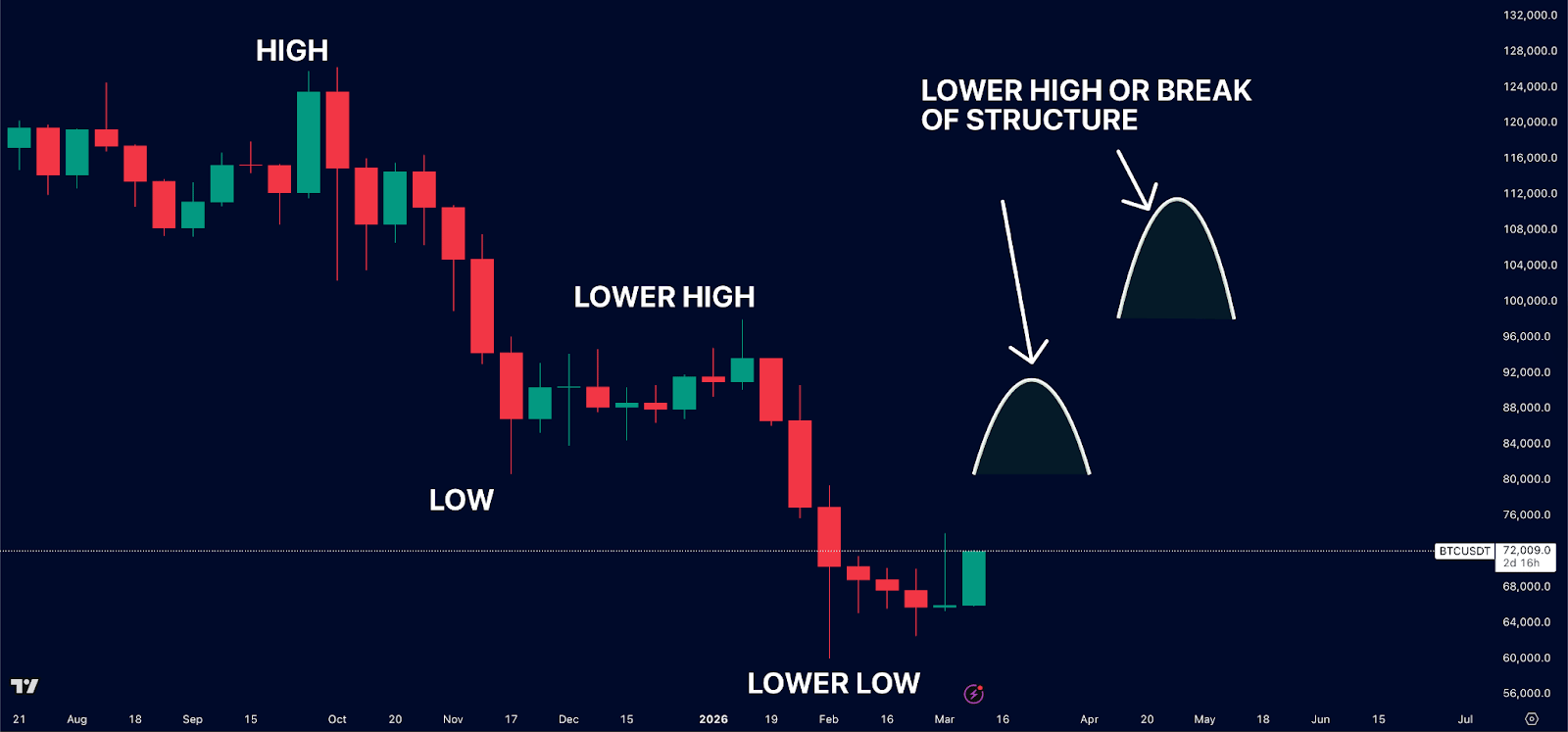
In terms of market structure, bitcoin has a big task on its hands.
On the weekly charts, bitcoin has a clear downtrend in the form of a high, low, lower high and lower low.
If bitcoin is to test the upside as discussed above, then it will be a pivotal rally to watch. In keeping with the current structure, bitcoin could put in another lower high towards $79,000, which could suggest a new low to come.
However, if bitcoin can break the lower high and push above $100,000, it could confirm a shift in structure and the high time frame low is in.
HyperLiquid
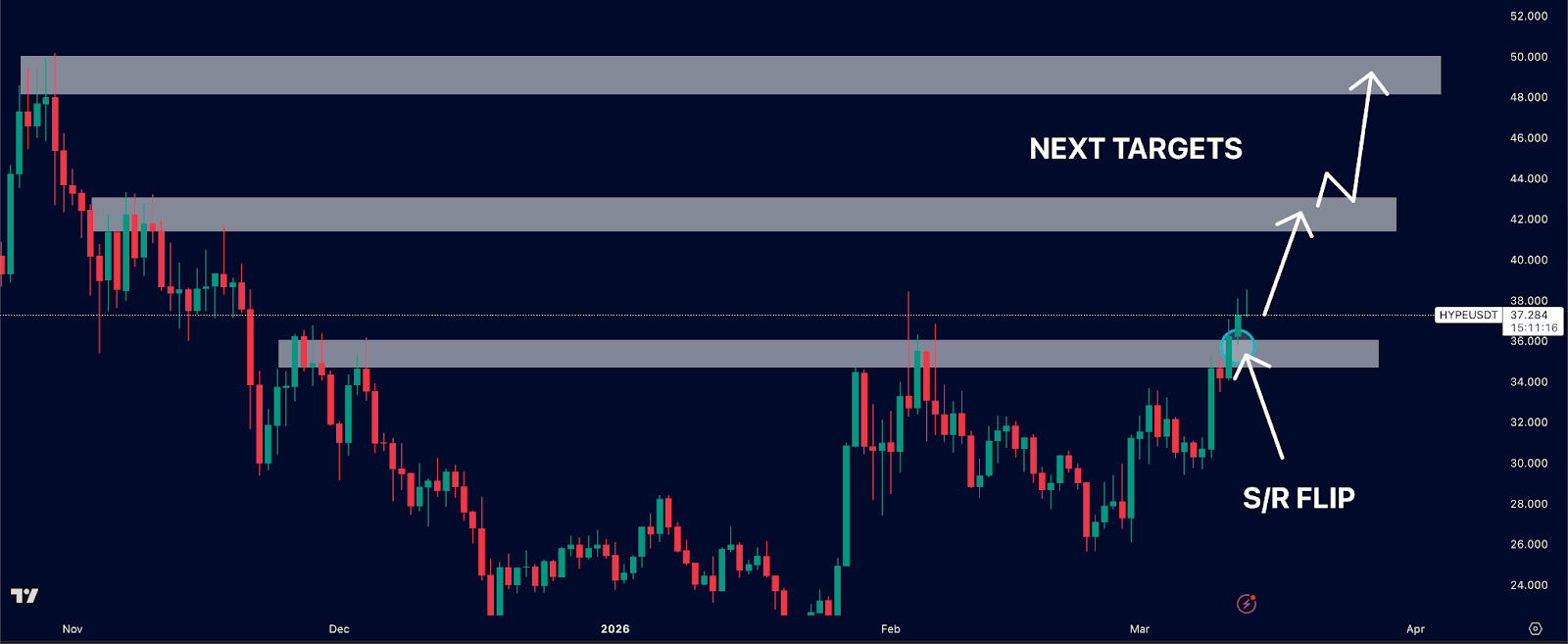
Hyperliquid is an outlier in this market as it has already broken out of resistance and appears to be confirming an S/R flip.
For as long as the grey box now holds as support, HYPE’s momentum is free to continue to the upside.
This could see $42 and potentially $50 come next as it is now embarking upon an uptrend.
S&P 500
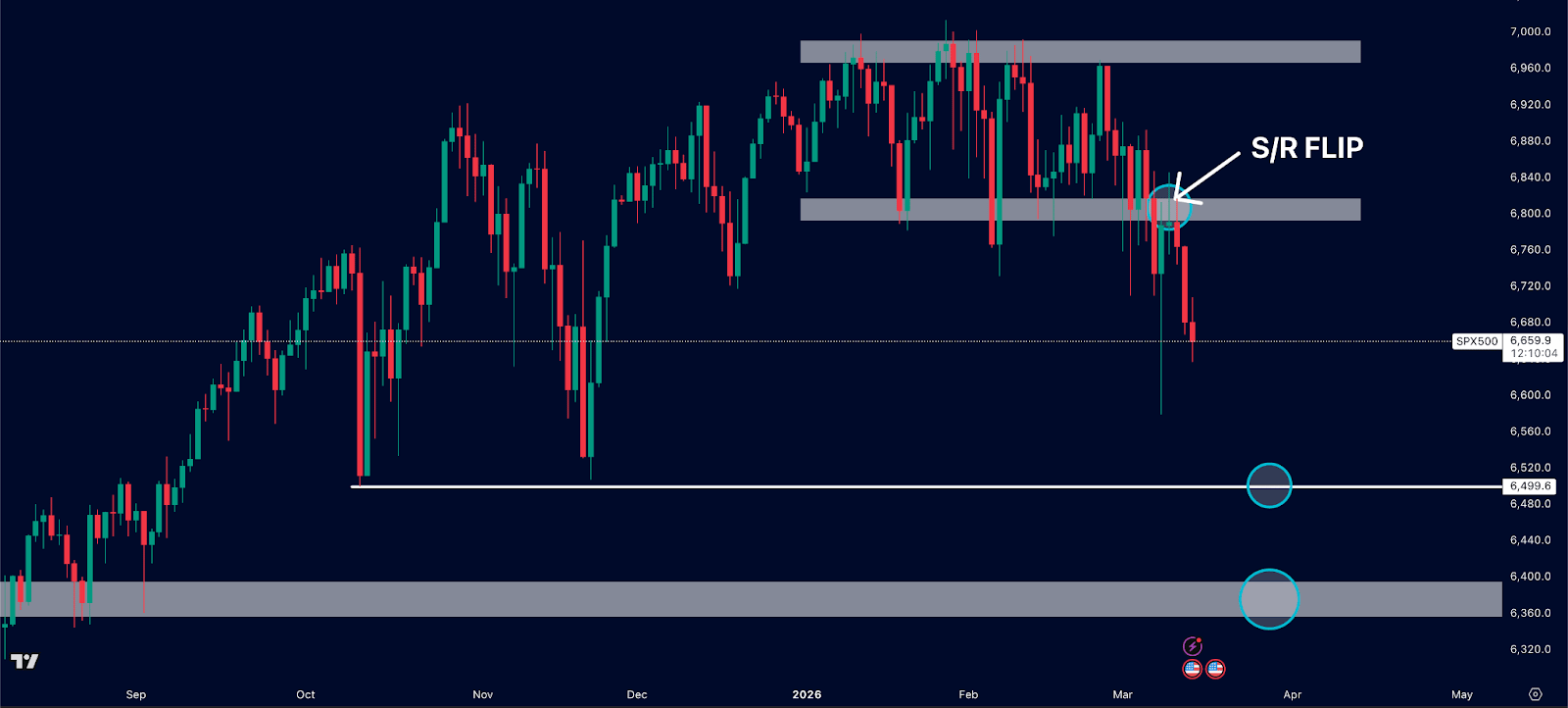
Unlike crypto, the S&P 500 is beginning a downtrend. This is a rare occurrence where we have bitcoin running in the opposite direction, particularly to the upside while SPX is heading down.
The S&P has already put in an S/R flip, with previous support now acting as resistance.
From here, the $6,500 level is a prime liquidity sweep, while $6,350 will come as a test of demand should it arise.
Wheat
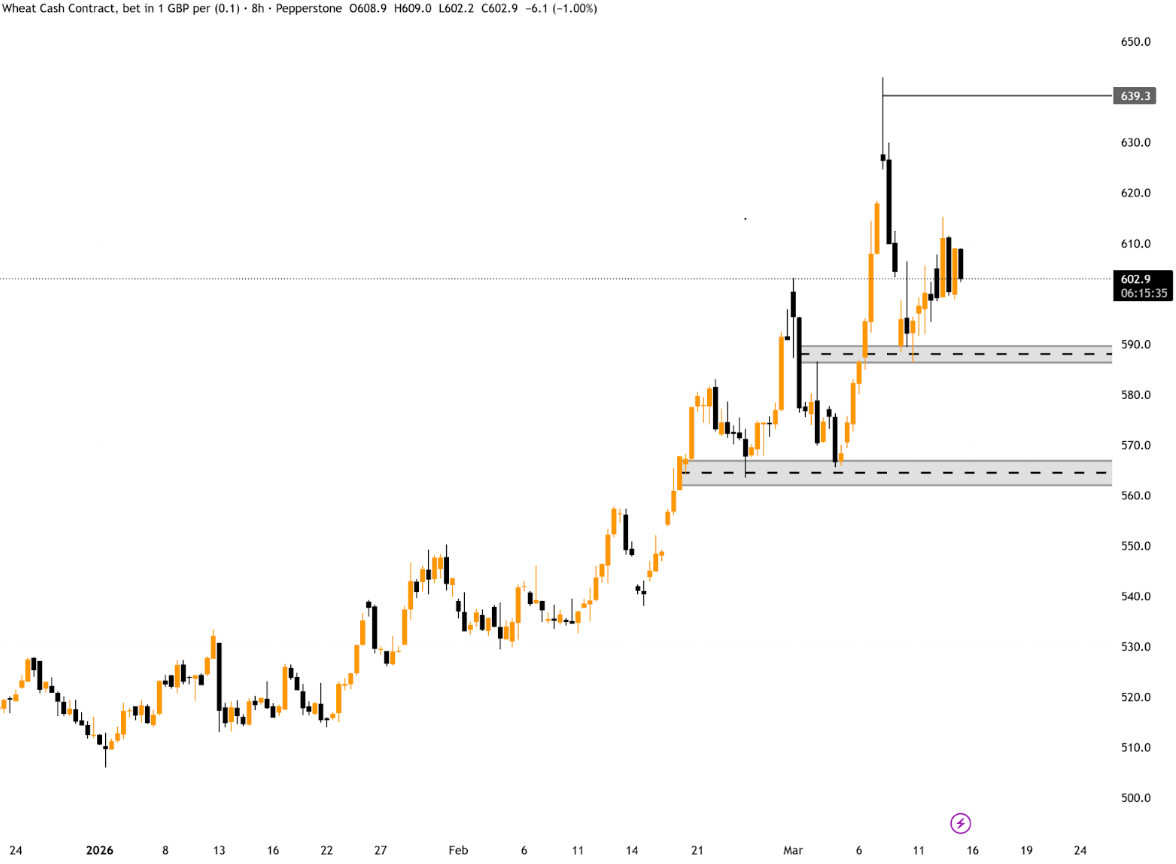
A strange asset for a crypto newsletter but there is a method to the madness! One of the key exports from the gulf is not simply the crude oil and gas, but rather their byproducts. As mentioned in the Crypto Saving Expert daily YouTube shows (watch here) is the amount of essential petrochemicals which come from the region.
One of the key exports is Fertiliser. This was mentioned to those in the Crypto Saving Expert discord (join here) and some of the key plays around this were floated. So far DOW is up 14%, NTR 18% and CF 28%. We expect this squeeze to continue and so value can be found down the chain. The lack of fertiliser, as planting season approaches, could lead to a record bad harvest of Wheat, which could see prices spike and inflation run rampant.
Fear And Greed Index
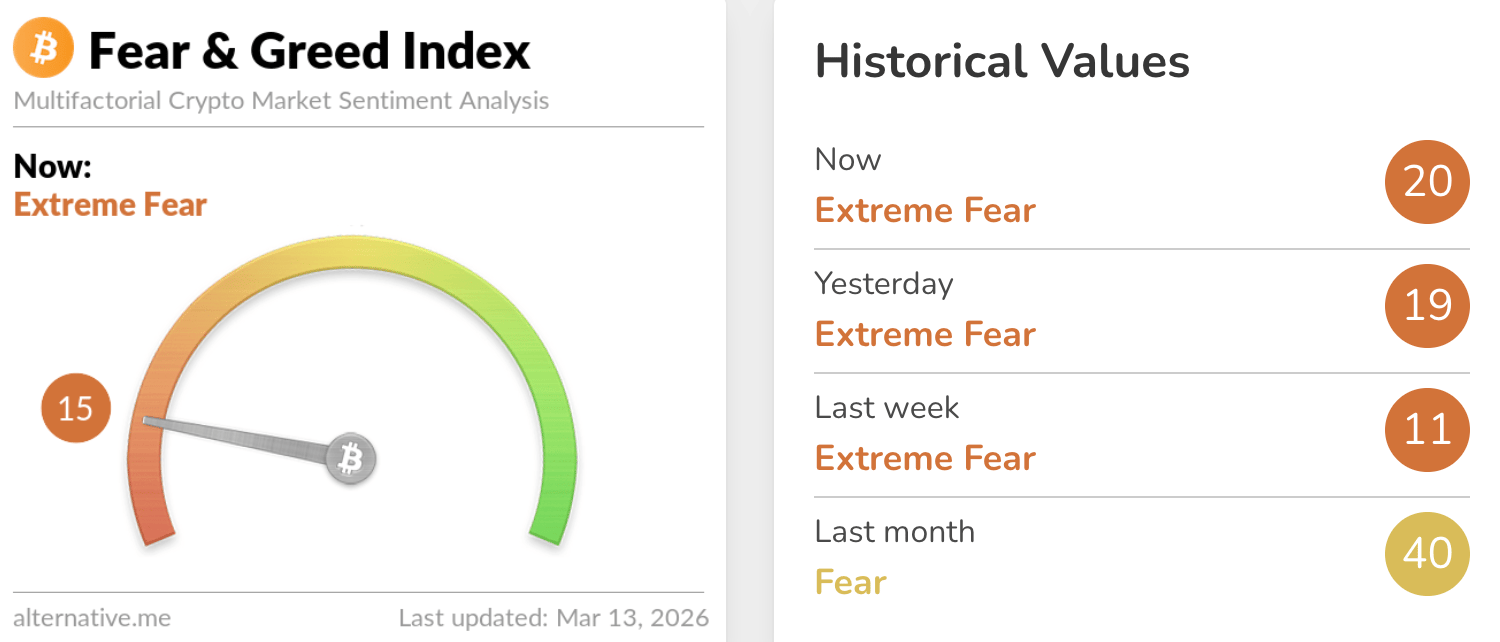
The Fear and Greed Index remains low, at just 15. This means it is still deep within Extreme Fear despite bitcoin’s low time frame upturn.
This suggests that investors want to see more. A rally towards $80,000 would likely be enough to inject some positivity into the market again.
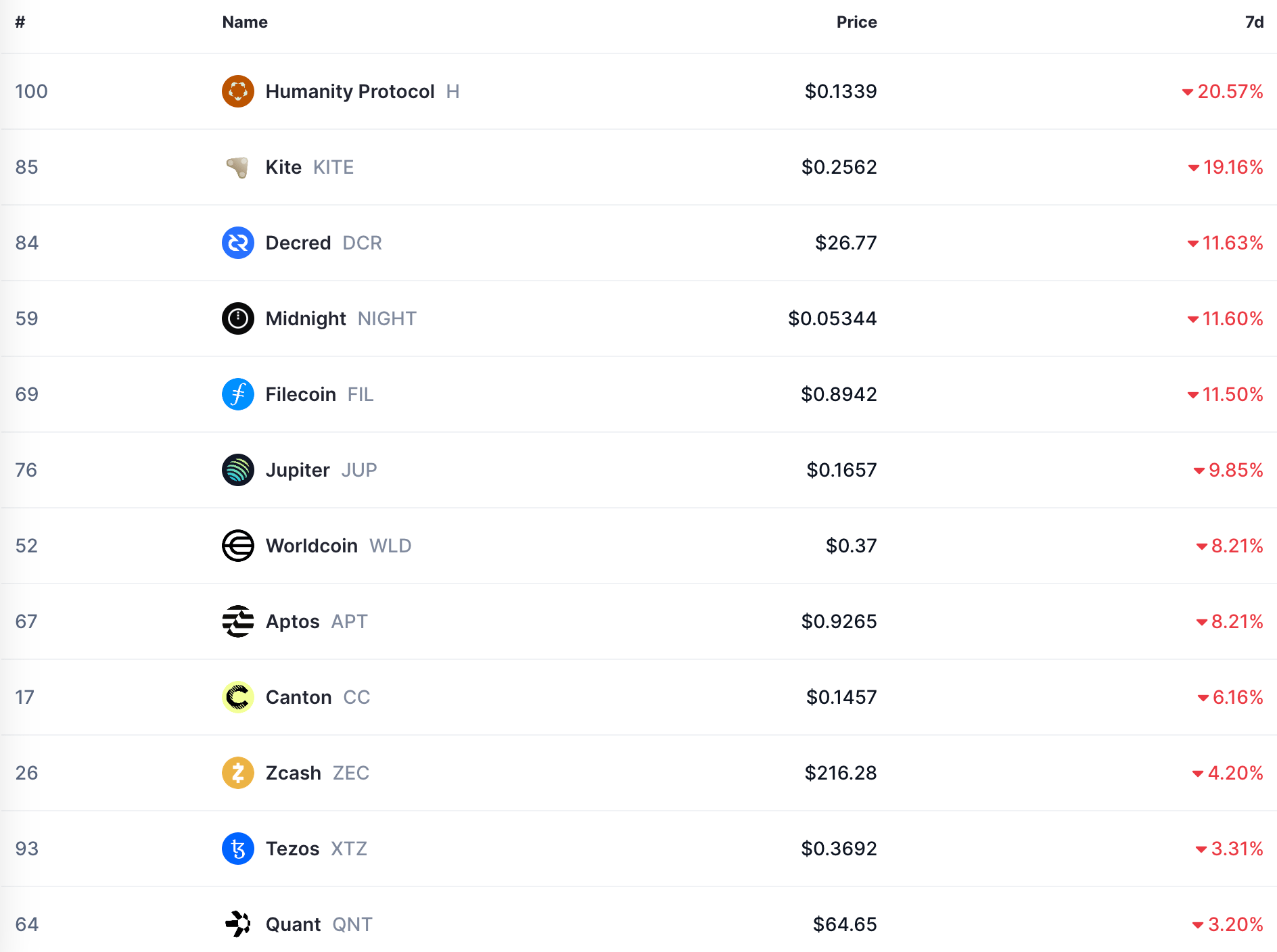
Gainers
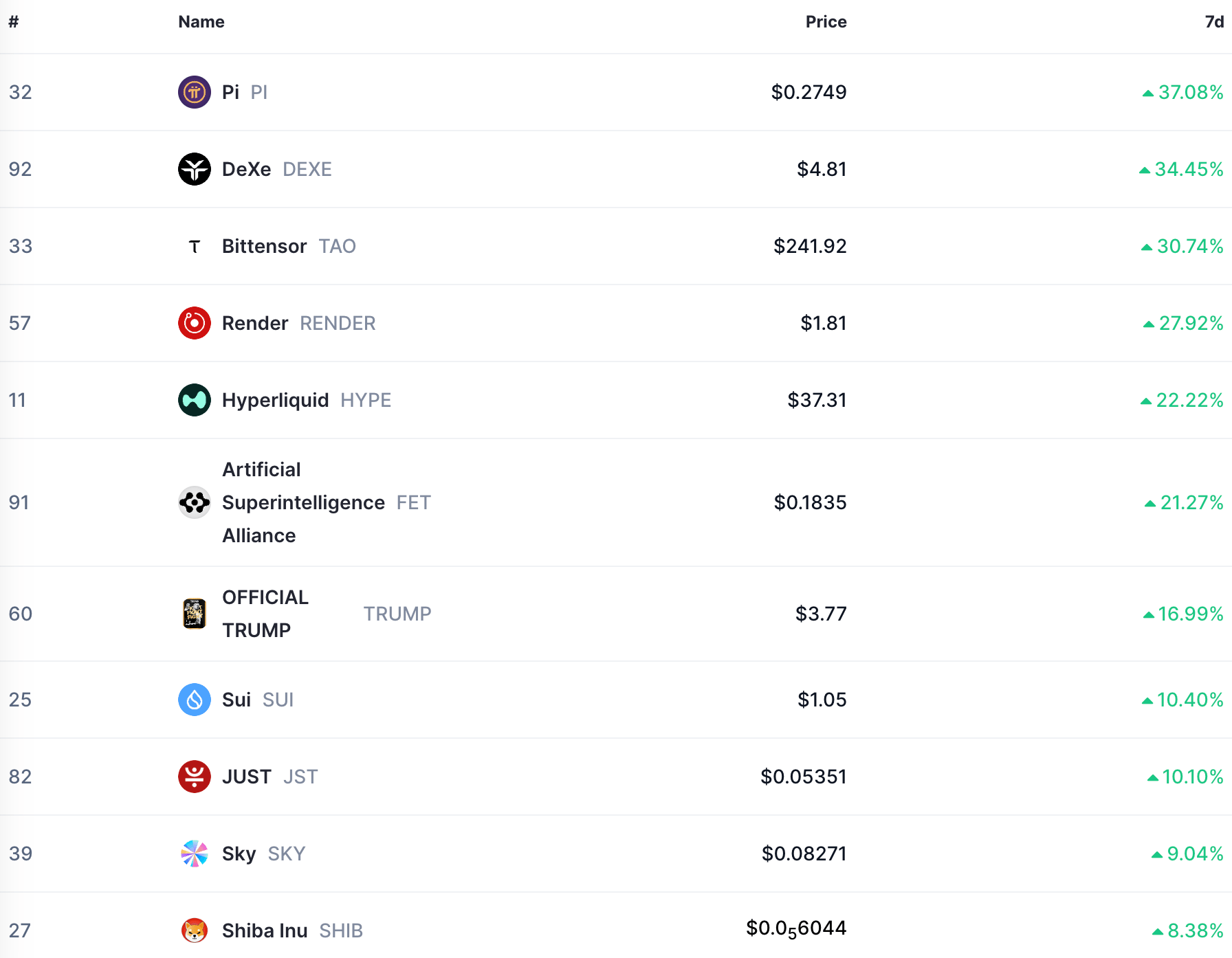
Losers
Unhosted Wallets Will not be Permissible in the UK - Bank of England
A Bank of England official says the central bank is open to alternatives to stablecoin holding limits but plans to ban self-custody wallets under the UK’s proposed regulatory regime.

The Bank of England is open to alternative ways of managing stablecoin risks instead of imposing strict holding limits, according to Deputy Governor Sarah Breeden.
Speaking to lawmakers at the House of Lords Financial Services Regulation Committee, Breeden said the central bank is primarily concerned about the potential impact stablecoins could have on traditional banking and credit markets.
“We are genuinely open to other ways of achieving the objective,” Breeden said. “But you would expect us as the financial stability authority to ensure that there isn't a precipitous drop in credit to businesses and households in the UK.”
Concerns Over Bank Deposits Moving Into Stablecoins
The Bank of England has proposed placing limits on how much stablecoin individuals could hold.
The suggested cap sits between £10,000 and £20,000 per person.
Officials argue the limits are designed to prevent a large-scale migration of deposits from traditional banks into stablecoins, which could reduce the amount of capital banks have available for lending.
If too many deposits moved into digital dollars or tokenised sterling, the Bank fears it could reduce credit availability for:
Businesses
Mortgages and household lending
Wider economic activity
Industry groups have criticised the proposal, arguing it could make the UK appear hostile toward crypto innovation and push companies to relocate to more crypto-friendly jurisdictions.
Bank of England Rejects Self-Custody Stablecoin Wallets
A key element of the proposed regulatory framework is a strict stance on self-custody.
Breeden told lawmakers that unhosted wallets, crypto wallets controlled directly by users rather than regulated platforms, would not be permitted to hold regulated stablecoins in the UK.
She said such wallets lack the oversight required to enforce anti-money laundering (AML) and know-your-customer (KYC) rules.
“There is this concept of an unhosted wallet, where you haven't got a wallet provider who is a regulated entity ensuring AML and KYC criteria are complied with,” Breeden said.
“Unhosted wallets will not be permissible in the UK.”
This approach contrasts with the regulatory framework in the United States, where self-custody wallets remain legal.
UK Stablecoin Framework Still Being Finalised
The Bank of England first outlined its proposed framework for sterling-denominated systemic stablecoins in a consultation paper released in November.
Public feedback on the proposal closed in February.
Meanwhile, the Financial Conduct Authority has already launched a regulatory sandbox allowing companies to test stablecoin products and services during 2026.
Breeden said the UK is not falling behind other jurisdictions and plans to start accepting applications from stablecoin issuers before the end of 2026.
“I hear some say the UK is behind. I simply don’t recognise that,” she said.
The Bank’s guiding principle, Breeden added, is that stablecoins used as money must be as robust and reliable as traditional bank-issued currency.
A Delicate Balance for UK Crypto Policy
The debate highlights the difficult balancing act facing regulators.
On one hand, policymakers want to encourage innovation in digital payments and fintech.
On the other hand, central banks remain concerned that large-scale adoption of stablecoins could reshape the financial system by pulling deposits away from traditional banks.
How the UK ultimately regulates stablecoins, including whether holding limits remain in place, could play a major role in determining whether the country becomes a major hub for digital finance or a tougher environment for crypto firms.
Oil Jumps Toward $100 Again as Tanker Attacks Escalate in the Strait of Hormuz
Oil prices are rising again after a series of tanker attacks across the Strait of Hormuz region, with at least 16 vessels hit since the conflict began.

Oil prices surged again in Asian trading after a wave of new attacks on commercial shipping across the Strait of Hormuz, intensifying fears that global energy supply could be disrupted.
Brent crude briefly climbed back above $100 per barrel on Thursday before easing slightly to around $97, while US crude traded near $92.
The rally comes despite a coordinated release of 400 million barrels from emergency oil reserves by members of the International Energy Agency, a move that analysts say has provided only limited relief.
Tanker Attacks Spread Across the Gulf
According to the UK Maritime Trade Operations, at least 16 commercial vessels have been attacked across the Arabian Gulf, Strait of Hormuz and Gulf of Oman since the conflict began on 28 February.
Three additional ships were hit overnight, bringing the total sharply higher.
Two tankers near Umm Qasr, close to Basra, were struck by explosions around 01:30 local time.
Both vessels caught fire, prompting full evacuations.
1 person was killed
38 crew members were rescued
Initial Iraqi investigations suggested the ships were struck by explosive-laden boats launched from Iran.
The attacks forced authorities to suspend operations at oil terminals in the area, though commercial ports remain open.
A third vessel a container ship was struck by an unknown projectile about 35 nautical miles off the UAE coast, causing a small onboard fire.
All crew were reported safe.
Energy Infrastructure Also Targeted
Shipping has not been the only target.
Across the Gulf region, energy infrastructure and port facilities have also come under attack.
Key incidents include:
Bahrain International Airport area fuel storage tanks catching fire following drone strikes
Fuel tank fires at the port of Salalah, where vessels have now been evacuated from the oil export terminal
A Thai-flagged ship damaged near Oman, with 20 sailors rescued
A drone striking a high-rise building in Dubai, causing structural damage but no casualties
A missile also struck an Italian military base in Erbil, northern Iraq, though no casualties were reported.
Iran Escalates Threats
Iran’s Islamic Revolutionary Guard Corps (IRGC) has issued fresh warnings that Western economic interests could be targeted.
Officials warned that Western financial institutions are now “legitimate targets” after Israeli strikes reportedly damaged an Iranian bank.
Several global banks have already begun pulling staff from Gulf offices.
Among those taking precautions:
HSBC has closed offices in Qatar
Citigroup and Standard Chartered told employees in Dubai to work remotely
Iranian officials have also warned that oil prices could climb as high as $200 per barrel if attacks on Iranian interests continue.
Oil Markets Ignore Emergency Reserve Release
Energy markets had initially expected the emergency reserve release to stabilise prices.
However, analysts say traders are increasingly pricing in the possibility of a prolonged conflict around the Strait of Hormuz, which handles roughly one-fifth of global oil trade.
As a result, the reserve release is being viewed as a temporary buffer rather than a long-term solution.
President Donald Trump said oil prices would eventually fall.
“Prices will come down more than anybody understands,” he said.
Markets have so far remained sceptical.
Outlook
The escalating attacks on shipping lanes highlight how quickly the conflict is spreading into global trade routes.
If tanker strikes continue or the Strait of Hormuz becomes impassable, analysts warn that oil markets could tighten dramatically.
For now, traders are watching closely to see whether the United States responds militarily to the latest attacks and whether additional emergency energy measures are announced by the IEA or G7 nations.
Bitcoin Reaches Major Milestone as 20 Millionth Coin Is Mined
Bitcoin has reached a historic milestone after the 20 millionth BTC was mined, leaving fewer than one million coins remaining before the network hits its 21 million supply cap.
The 20 millionth Bitcoin has officially been mined, marking one of the most significant milestones in the history of Bitcoin.
The event occurred on Monday as the Bitcoin network continued producing new blocks, bringing the total circulating supply to just over 20 million BTC.
With Bitcoin’s supply capped at 21 million coins, the milestone means that more than 95% of all Bitcoin that will ever exist has now been created.
Only One Million Bitcoin Left to Mine
Bitcoin’s supply schedule is programmed directly into its code and cannot be altered without consensus from the network.
New Bitcoin enters circulation through the process of mining, where specialised computers validate transactions and secure the blockchain.
The reward for mining new blocks currently stands at 3.125 BTC per block, following the most recent halving event in 2024.
Because rewards are cut in half roughly every four years, Bitcoin’s issuance slows over time.
At the current pace, the final Bitcoin is expected to be mined around the year 2140.
Millions of Bitcoin Already Lost
While the theoretical supply cap is 21 million coins, analysts believe the actual number of Bitcoin available in the market is significantly lower.
Blockchain researchers estimate that between 3 million and 4 million BTC may already be permanently lost due to forgotten passwords, discarded hard drives, or early wallets that have never moved funds.
One of the largest lost holdings is believed to belong to Satoshi Nakamoto, the pseudonymous creator of Bitcoin.
Wallets linked to Satoshi contain roughly 1 million BTC, none of which have ever been moved.
Bitcoin’s Scarcity Narrative Strengthens
Bitcoin’s fixed supply is often cited as one of the key factors behind its value proposition.
Unlike traditional currencies, which can be issued by central banks, Bitcoin’s monetary policy is predetermined and transparent.
This scarcity has led many investors to compare Bitcoin with gold as a digital store of value.
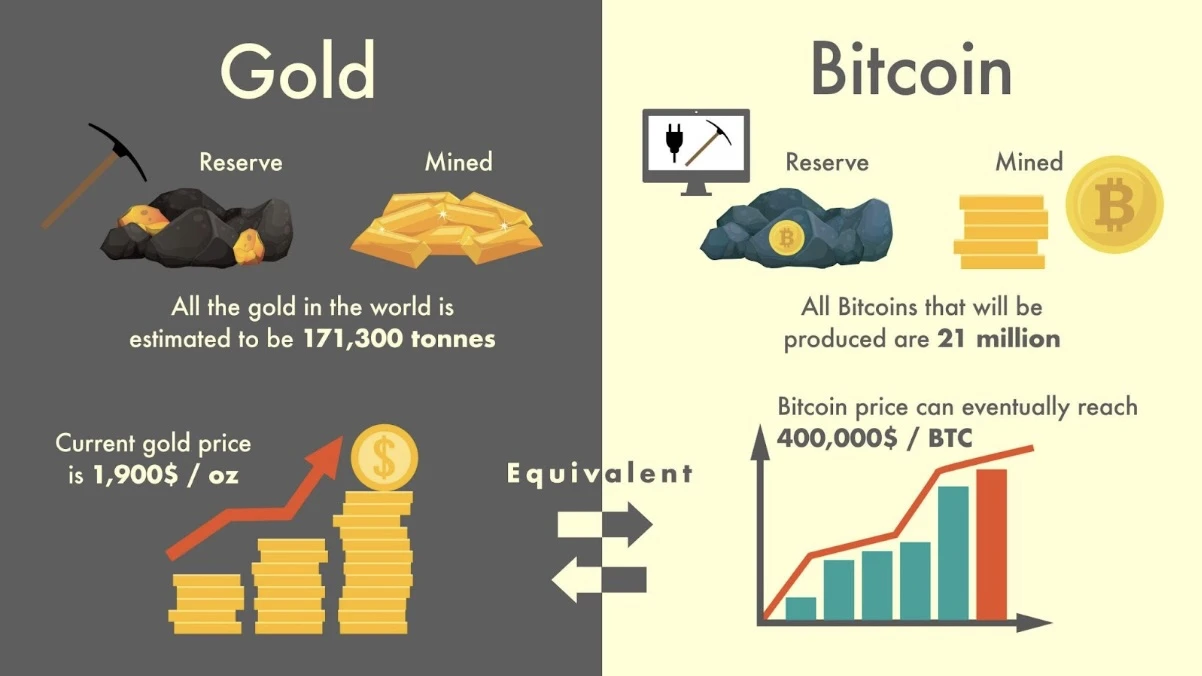
Supporters argue that as adoption grows and supply issuance slows, the limited number of available coins could place increasing upward pressure on prices over the long term.
Mining Industry Faces Changing Economics
The milestone also highlights how the economics of mining are changing.
The 2024 halving cut mining rewards from 6.25 BTC to 3.125 BTC, reducing the amount of new Bitcoin entering circulation.
As block rewards continue to decline, miners are expected to rely increasingly on transaction fees to sustain operations.
Some mining firms have already begun diversifying their infrastructure into areas such as artificial intelligence computing and high-performance data services.
A Network Milestone
Reaching the 20 million coin mark represents more than just a technical achievement.
It reflects 15 years of continuous operation for the Bitcoin network, which has processed millions of blocks and trillions of dollars in value since launching in 2009.
With fewer than one million Bitcoin left to mine, the milestone reinforces the asset’s core narrative: a globally accessible digital currency with a strictly limited supply.
For supporters of Bitcoin, that scarcity is exactly what makes the network unique.


We’re excited to offer you a massive 35% discount!
What You Unlock:
- Strategies from top crypto experts
- Exclusive access to market insights, guides, and top tips
- Tools to maximise your crypto savings and investments
- A supportive community of like-minded crypto enthusiasts
- Access to our community Discord
Use the code 35OFF at checkout to claim your discount and get full access to our community plan for just a fraction of the price.
Secure your spot in the Crypto Saving Expert Community today.
Sponsored by: Stonksy

Stonksy is a momentum identifier that aims to capture expansive market moves before they happen by highlighting the start of potential price shifts. It can be used across all markets, including crypto, stocks, indices, commodities, and currencies.
Stonksy is growing in users week-on-week, proving why it aims to become one of the most-used indicators in the industry.
You can get 25% off the annual Stonksy plan with code TMG25, taking the price down to just £749.25 for an entire year of full access. Sign up here.
Find examples of Stonksy indications posted to the X every day: @stonksyio and learn how to use Stonksy and how it can benefit your trading system on the YouTube channel, with daily livestreams at 12:00 UTC.
This Newsletter is strictly for informational purposes only; the content is generic and has not been tailored in any way. Crypto Saving Expert UAB (“CSE”) is not providing, and should not be interpreted as providing, any form of offer of any currency, security, financial instrument or digital asset, or investment advice, recommendations or strategy. The content of this Newsletter is not intended to replace your own research with regard to any assets, products or services, and any action taken on the basis of this material is entirely at your own risk. CSE neither accepts nor assumes any liability or responsibility for any loss or damage arising out of, or in any way connected to, the Newsletter content. Cryptocurrencies and digital assets may be unregulated in your jurisdiction, any profits may be subject to tax and the value of any investment could fall.
If you click on a link within this Newsletter to go through to a provider, we may get paid. This usually only happens if you get a product/use a service from it. This is what helps fund CSE and keeps the majority of our content free to use. Two crucial things you should know about this, however: a) this never impacts our editorial recommendations, if something is included, it is because we independently rate it as the best; and b) you will always get as good a deal, or better, than if you went direct. For full details on how CSE is funded, please click here.
CSE collects, processes and stores certain data. Such data may be shared with CSE’s wholly owned subsidiary company, Crypto Saving Expert Limited. Please note that by submitting information about yourself to CSE you are consenting to such use. For full details on our collection, processing and storage of data, together with your rights in relation thereto, please consult our Privacy Statement here.