- Crypto Saving Expert's Newsletter
- Posts
- Crypto Saving Expert Newsletter - Issue 183
Crypto Saving Expert Newsletter - Issue 183
GM.
Markets are on edge again.
War headlines, oil spikes, and mixed signals are keeping volatility elevated… but nothing has fully broken yet.
Gold is bouncing. Risk is hesitating.
And Bitcoin?
Still stuck at the door.
So the question now is simple.
Is this just another rejection…
Or the moment Bitcoin finally pushes through and changes the narrative?
Let’s break down the markets this week. 👇
Table of Contents
Sponsored by: PrimeXBT

Markets are tense. Gold and silver are moving strongly while crypto remains range-bound.
This is why multi-asset trading matters. On PrimeXBT, you can trade gold, FX, indices, commodities, and crypto from a single account.
Exclusive community deal: 0 trading fees on the PXTrader platform - 20% trading bonus. No need to switch platforms
Sign up using the link to access this offer HERE
Bitcoin Knocks On The Door
Bitcoin is maintaining its push for an official breakout despite numerous recent failures.
Bitcoin
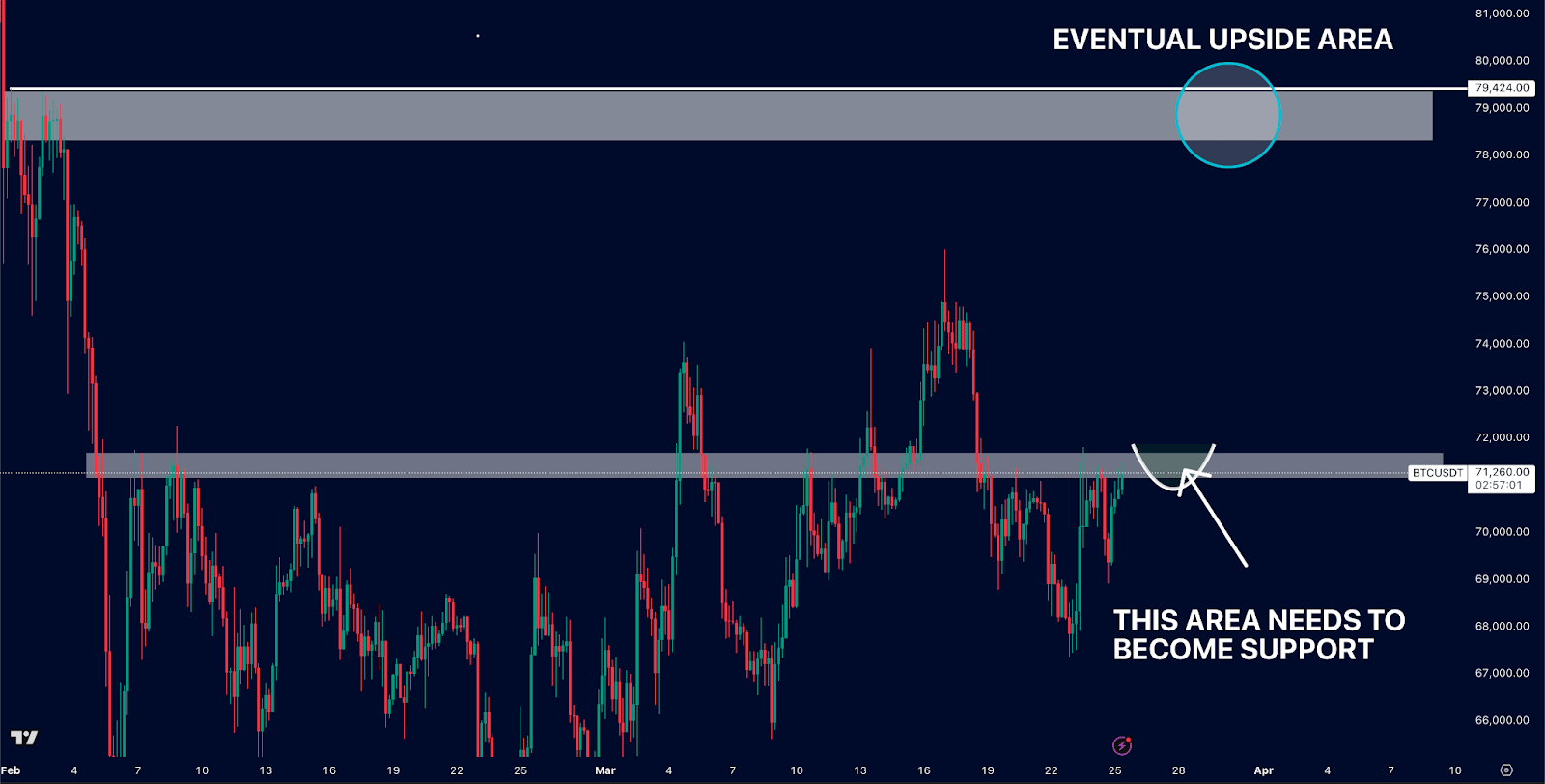
Bitcoin is continuing to press resistance at $71,500, which is proving to be a huge task and one sellers are defending strongly.
However, if bitcoin can flip it to support, then it opens the door for a big expansive move given the effort taken to confirm an S/R flip.
The $79,000 region is in waiting, as that holds the next supply area alongside a clear area for liquidity.
Hyperliquid
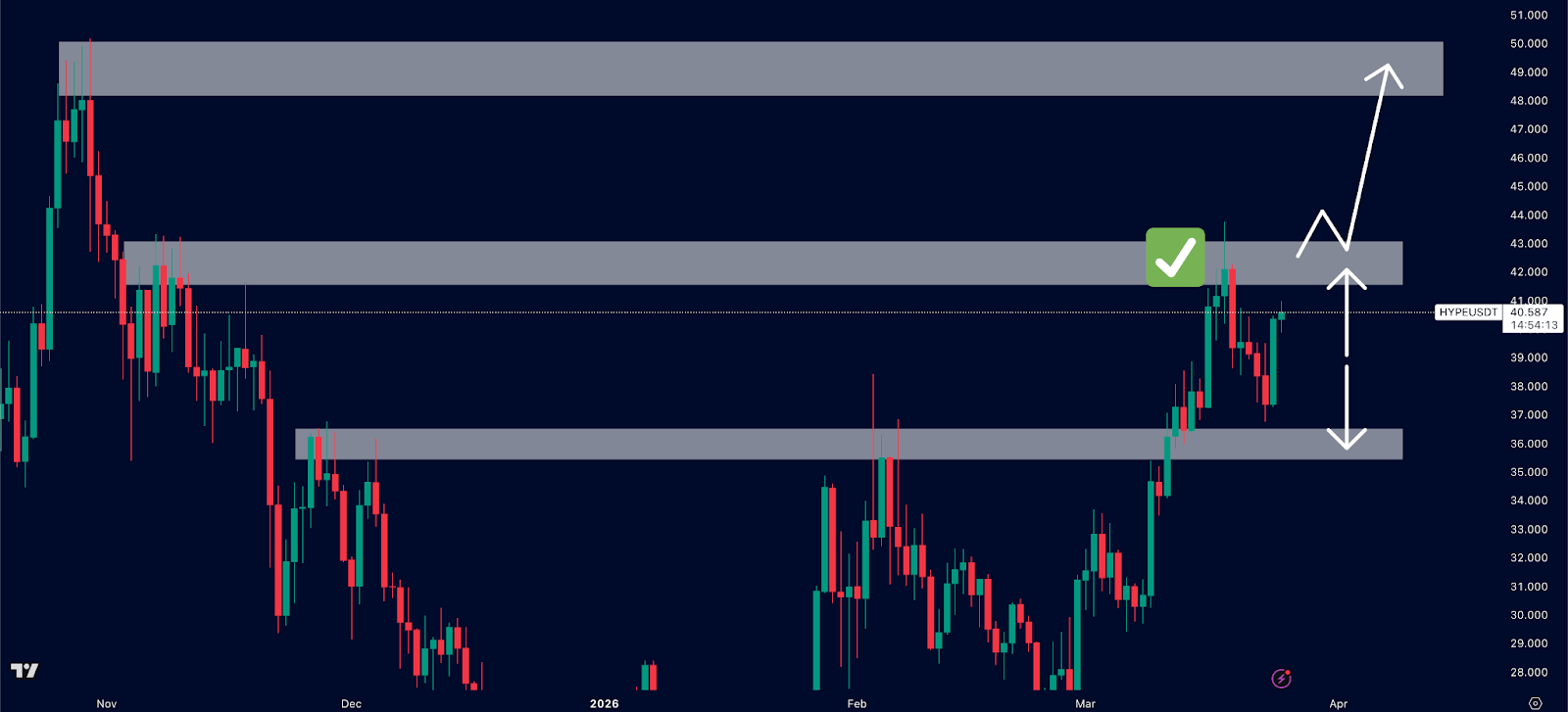
A few newsletter editions ago, we covered HYPE and how it was moving strongly in the market.
The above chart has the same areas of interest plotted, demonstrating how the price moved from $36 towards $43 as suggested in the issue.
From there, HYPE has rejected and retraced, giving it a clear area to trade between for the meantime.
Still, a climb above $43 and it could then expand towards $50.
Gold
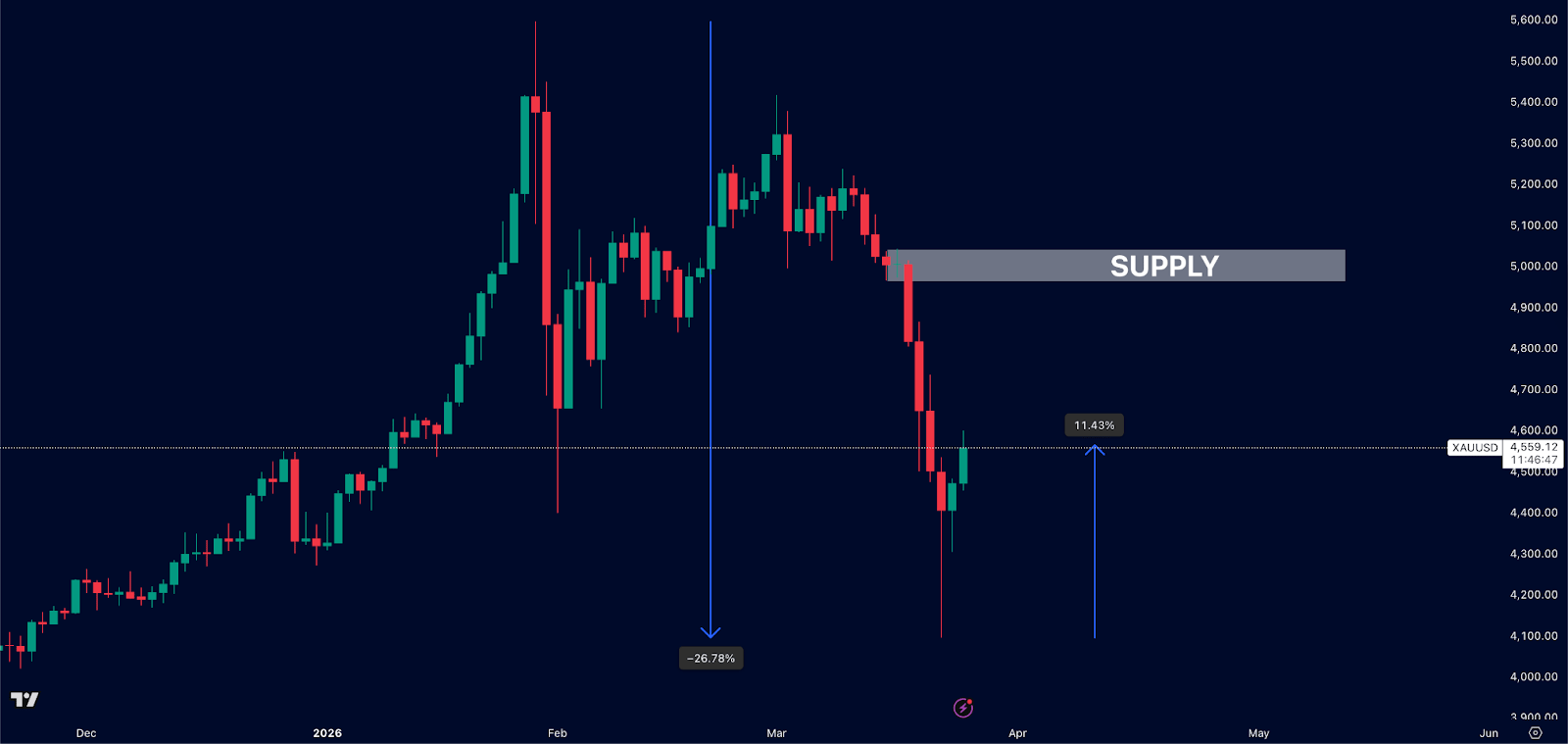
Gold officially entered bear market territory this week, after falling over 20% from its all-time high, going off the official definition.
Still, Gold has bounced over 11% from Monday’s low and could still remain in a high time frame uptrend from here.
The true test will come around $5,000 as it enters supply.
Microsoft
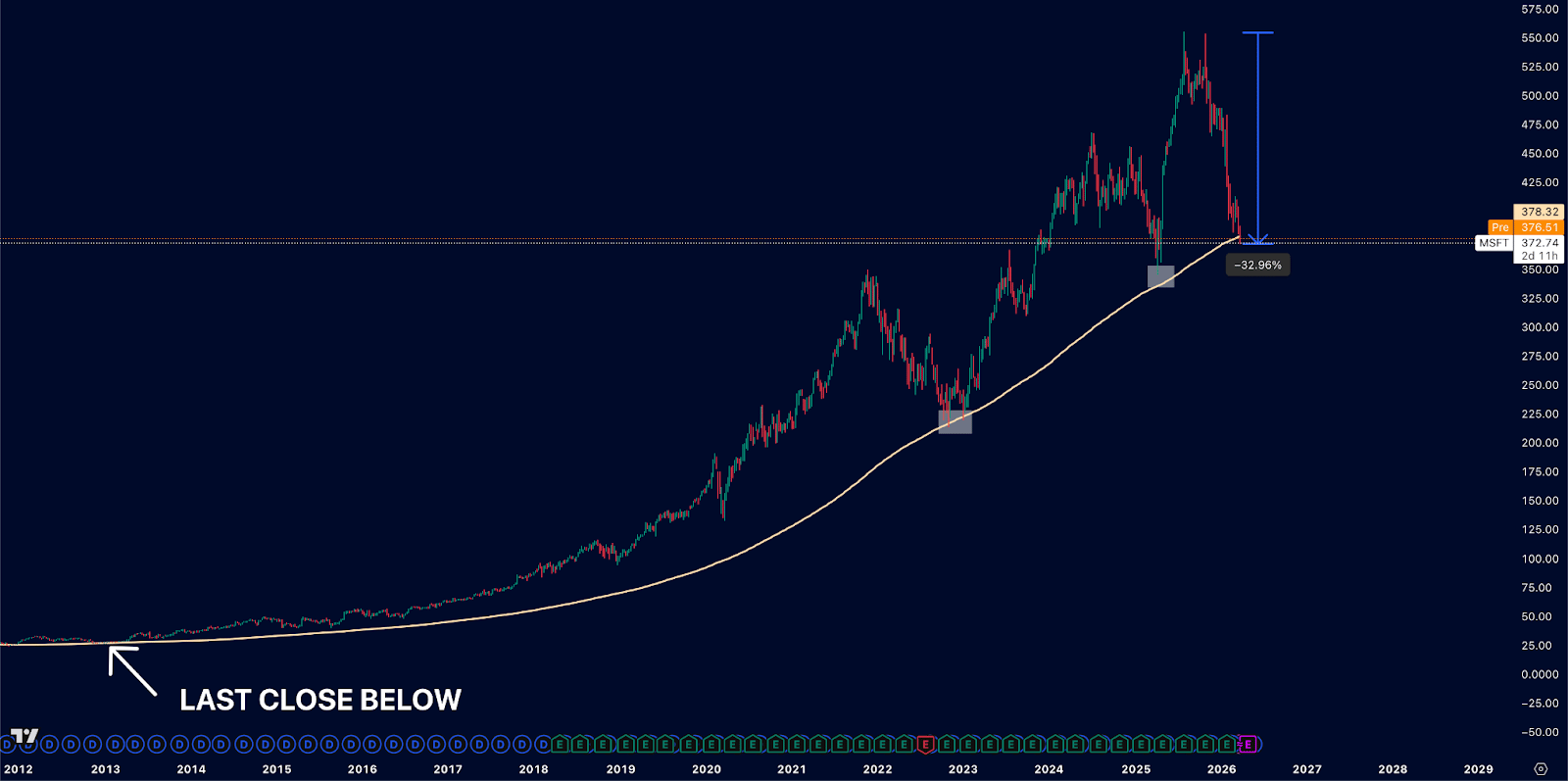
Microsoft has swiftly become the weakest stock in the Magnificent Seven after dropping over 32% from its all-time high.
However, the drop isn’t the biggest concern for MSFT. It is currently below its 200-weekly moving average, a massive area of interest.
MSFT last tested the 200WMA in early 2023 and came close during the tariff crash last year, but did not actually come into contact.
The last time MSFT closed below its 200WMA was back in late 2012, almost 14 years ago, giving this week's candle huge significance.
Sugar
We’ve spoken about our bull case for soft commodities a lot recently, with Wheat featuring a few weeks ago. The structural supply constraints in the fertiliser market continues, despite more throughput from the Strait of Hormuz. However, fertiliser is a by-product of Gas production, and with Qatar (worlds major producer) offline and expected 20% reduced capacity for 5 years, this is likely to continue.
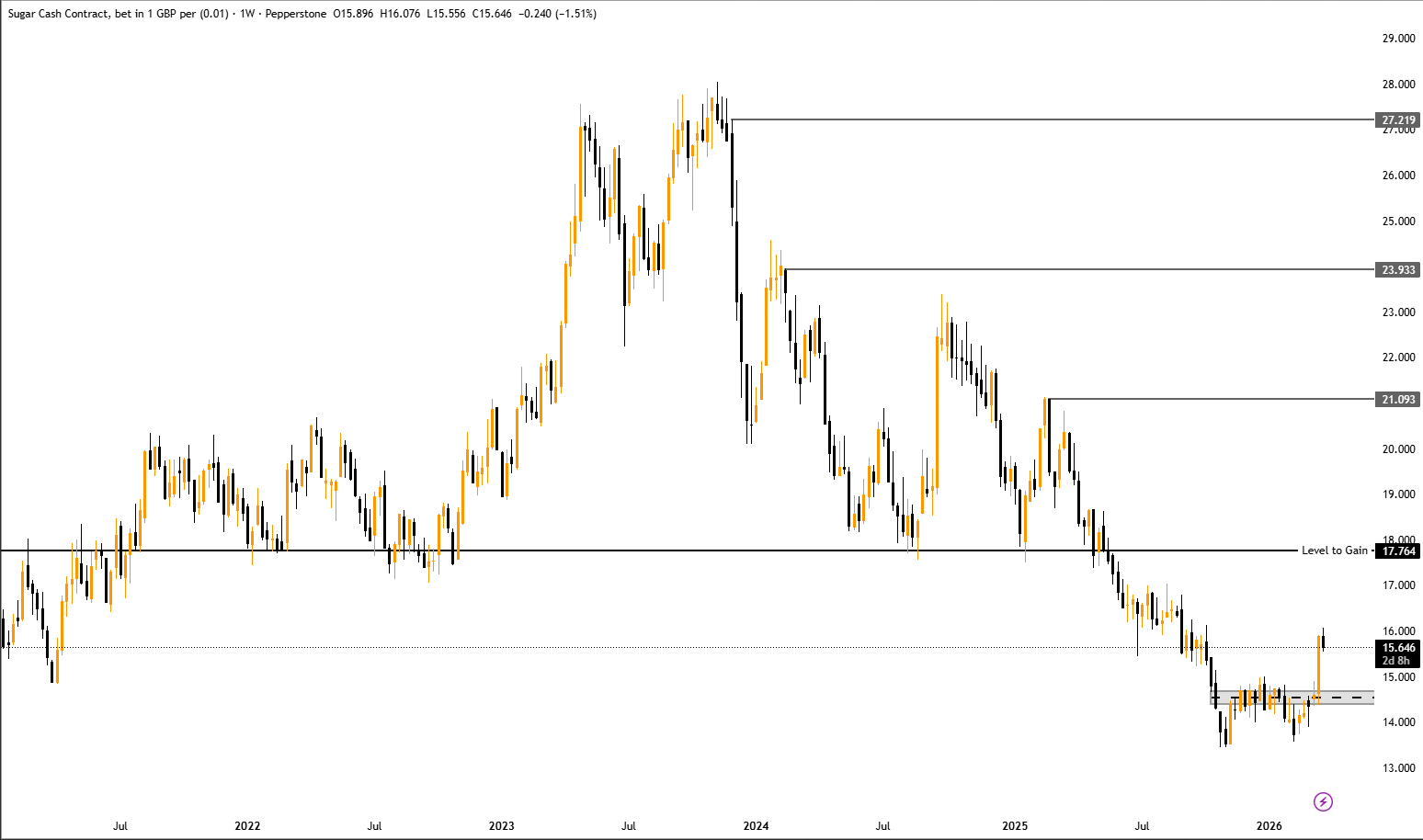
Looking through, the one which catches the eye is sugar. Following a torrid decline, the commodity appears to have found some strength, and looks poised for a strong reversal. The key level to watch is $17.7, which is a key long term S/R level. A gain of this could see a quick move up towards $21, $24 and $27 should current conditions persist.
You can trade Sugar on PrimeXBT
Fear And Greed Index
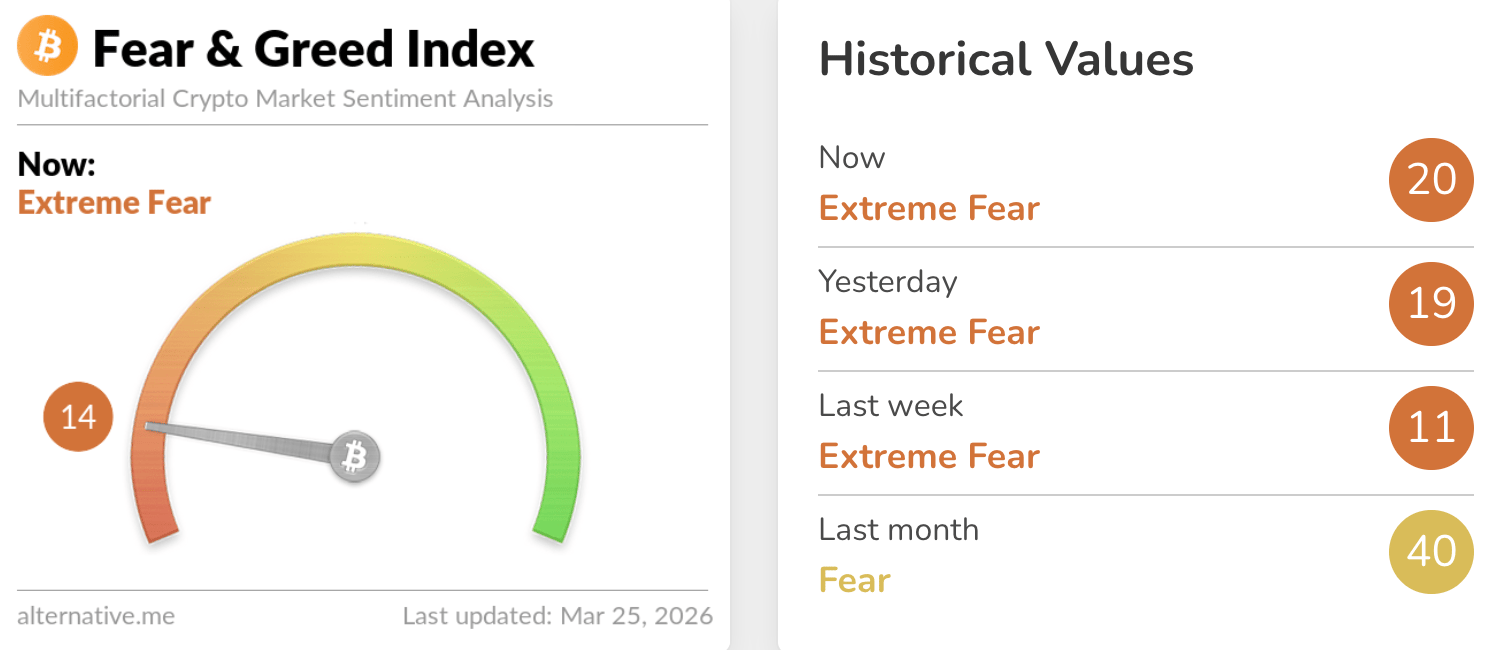
The Fear and Greed Index scores 14 and remains within Extreme Fear despite bitcoin’s continued push towards breaking resistance.
It appears as though bitcoin must give a solid push to the upside to raise investor spirits.
Gainers
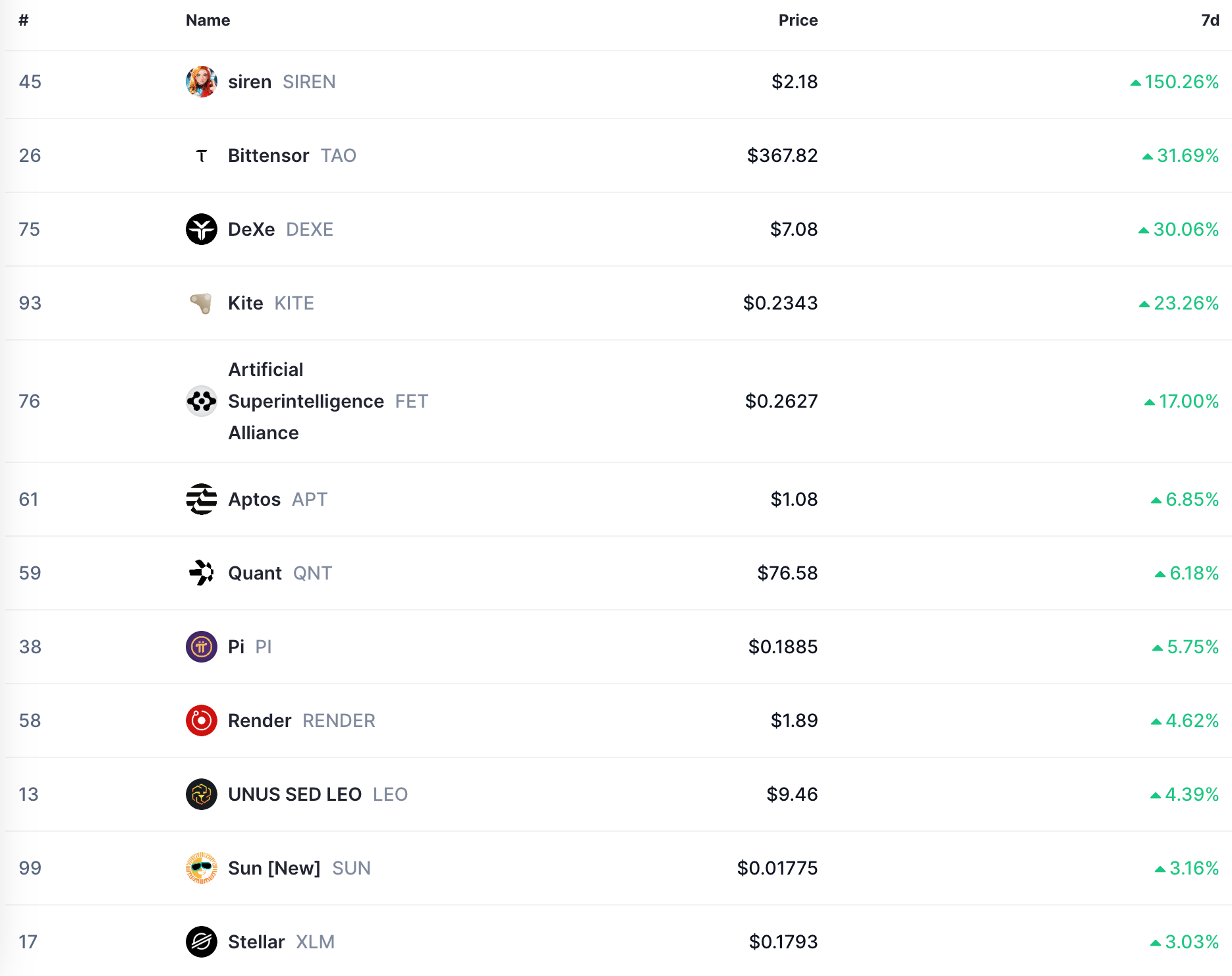
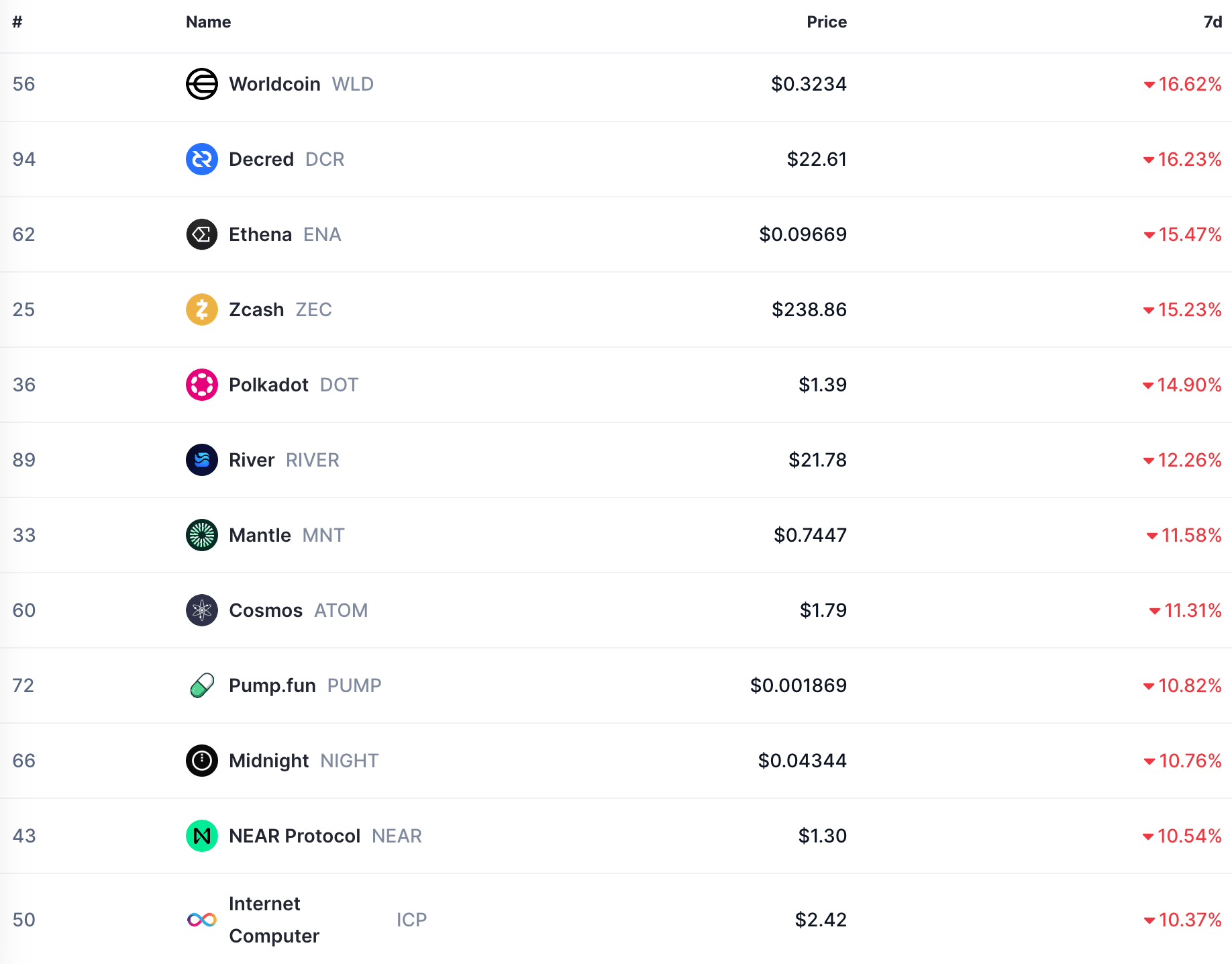
Losers
The Yen Carry Trade Isn’t Gone, It’s Getting More Dangerous
The yen carry trade has slipped out of headlines, but the risk is building beneath the surface.
While markets are focused on oil and the Strait of Hormuz, a far more structural risk is quietly developing.
The carry trade hasn’t unwound.
It’s being delayed.
Where USD/JPY Stands
USD/JPY is currently trading around 158–159, close to its 2026 high of 159.84.
The yen remains weak, even as geopolitical tensions escalate.
That’s the key anomaly.
In a typical risk-off environment, the yen strengthens.
This time, it isn’t.
Why the Yen Is Weak, Not Strong
The reason is structural.
Japan is an energy importer.
The country imports roughly 95% of its oil, with around 70% flowing through the Strait of Hormuz.
As oil prices rise, Japan’s trade balance deteriorates.
That puts direct downward pressure on the yen.
Instead of acting as a safe haven, the currency is behaving like a commodity-linked liability.
This is why the classic carry trade unwind hasn’t triggered.
The yen is moving in the wrong direction.
The BOJ Is Trapped
The Bank of Japan is now in a difficult position.
Rates are currently at 0.75%, the highest since 1995.
But the policy path is unclear.
Rising oil prices are pushing inflation higher, which argues for rate hikes.
At the same time, economic weakness argues for caution.
This is a classic stagflation trap.
Meanwhile, the carry trade itself remains massive.
Estimates suggest around $500bn in outstanding yen-funded positions are still active.
As rates rise, the profitability of those trades shrinks.
The longer this persists, the more unstable the structure becomes.
The Real Risk: Oil in Yen
Most traders are watching oil in dollars.
That’s not the real risk.
The real risk is oil in yen.
Asian crude benchmarks have surged, with Dubai crude reportedly trading above $150, creating an unusually wide spread versus US benchmarks.
For Japan, this creates a double shock:
Higher oil prices
A weaker currency
That combination is toxic for the yen.
The Two Triggers That Matter
The carry trade hasn’t unwound yet.
But it will, under the right conditions.
Scenario 1: Peace Deal, Yen Strengthens
If a deal is reached in the Middle East and oil prices fall, the yen could strengthen rapidly.
This would trigger the classic unwind:
Margin calls on leveraged positions
Forced selling of risk assets
Sharp declines in equities and crypto
Scenario 2: Intervention Shock
If USD/JPY breaks above 160, Japanese authorities may step in to defend the currency.
That intervention could trigger a violent reversal.
Markets are already on watch for this threshold.
The key takeaway is simple:
The carry trade hasn’t gone away.
It’s been masked by the oil shock.
Underlying positions remain elevated, with global capital still heavily exposed to yen-funded leverage.
That makes the current setup more dangerous, not less.
The unwind hasn’t happened yet.
But the conditions for it are building.
The Bottom Line
The market is watching oil.
It should be watching the yen.
The next major risk event may not come from escalation.
It may come from resolution.
Copper Is the New Gold, and the Market Hasn’t Noticed Yet
AI infrastructure is driving a surge in copper demand, with analysts warning of a major supply shortage as data centre expansion accelerates globally.

Gold has long been the go-to asset in times of uncertainty.
But a growing number of analysts and industry insiders are beginning to argue that copper, not gold, may be the most important commodity of the next decade.
The reason is simple: the world is undergoing a massive infrastructure shift driven by artificial intelligence, and that shift is extremely copper-intensive.
AI Is Creating an Unprecedented Copper Demand Shock
The scale of copper demand tied to AI is staggering.
👉 A single AI data centre can require 50,000 tons of copper
👉 There are currently over 500 new data centres being built
👉 That equates to millions of tons of copper demand from just one sector
According to JPMorgan, data centre-related copper demand is expected to hit 475,000 tons this year alone, roughly four times higher than last year.
This is not a gradual increase. It is a demand shock.
Supply Can’t Keep Up
While demand is accelerating rapidly, supply is struggling to keep pace.
According to S&P Global, the world could face a 10 million ton copper shortage by 2040.
Several structural issues are driving this imbalance:
👉 It takes up to 19 years to open a new copper mine in the US
👉 Ore grades have declined by roughly 40% since 1991, meaning more material must be processed to extract the same amount of copper
👉 Existing mines are becoming deeper, more expensive and less efficient
In short, the world needs more copper, but producing it is getting harder.
Even Tech Leaders Are Paying Attention
The shift is not going unnoticed at the highest levels of the tech industry.
Jensen Huang, CEO of Nvidia, has highlighted the importance of infrastructure in powering AI’s growth.
While most of the focus has been on chips and compute, the underlying reality is that none of it works without physical materials like copper.
Every server, every cooling system and every power connection depends on it.
Why Copper Could Outperform Gold
Gold is traditionally viewed as a store of value.
Copper, by contrast, is an industrial metal, but that may be exactly why it is becoming more valuable.
Gold demand is largely driven by:
👉 central banks
👉 investors
👉 macro uncertainty
Copper demand is driven by real-world usage.
👉 energy infrastructure
👉 electric vehicles
👉 renewable power
👉 AI data centres
As the global economy becomes more electrified and digitised, copper is becoming a foundational input, not just a commodity.
The Market Hasn’t Fully Priced It In
Despite these fundamentals, copper has not yet captured the same level of retail attention as gold or even cryptocurrencies.
Much of the investment narrative still revolves around:
👉 inflation hedges
👉 interest rates
👉 central bank policy
Meanwhile, a structural supply-demand imbalance is quietly building in the background.
If current projections hold, the gap between supply and demand is expected to widen significantly over the next decade.
The Bottom Line
The global economy is entering a phase where physical infrastructure, not just digital assets, will determine growth.
Artificial intelligence may be the headline story, but copper is the hidden backbone enabling it.
While investors continue to focus on traditional safe havens like gold, the real opportunity may lie in a commodity that powers everything from data centres to energy grids.
By the time the broader market catches on, the supply constraints may already be locked in.
Trump Delays Iran Strike as Markets Rally, But War Risks Remain
Markets bounced after Donald Trump postponed planned strikes on Iran, but ongoing attacks and conflicting signals suggest the situation remains highly unstable.

Just hours before the deadline hit, everything changed.
After issuing a 48-hour ultimatum over the Strait of Hormuz, Donald Trump unexpectedly stepped back, announcing a five-day delay to planned strikes on Iranian power infrastructure.
The reason: claimed progress toward a potential deal.
Trump Signals Talks, Iran Denies Everything
Trump said the US and Iran were engaged in “very good and productive” discussions aimed at a “complete and total resolution of hostilities.”
He added that both sides want a deal, with early agreement forming around preventing Iran from acquiring nuclear weapons.
But there is a major problem.
Iran says none of this is happening.
The country’s parliament speaker dismissed the claims as “fake news”, accusing the US of trying to manipulate oil markets.
This leaves markets facing two competing narratives:
A potential ceasefire
Or a complete breakdown in communication
Markets Surge, Then Cool Off
Markets reacted immediately to the perceived de-escalation.
The Dow Jones surged over 1,000 points following Trump’s announcement.
The S&P 500 recovered to around 6,581, after briefly slipping below its key 200-day moving average (~6,620).
In the UK, the FTSE 100 opened near 9,900, still under pressure but stabilising.
Asian markets, which had sold off heavily earlier, also saw relief following the announcement.
Oil saw one of the sharpest reactions.
Brent crude dropped from above $113 to as low as $96 immediately after the news, before recovering to around $101.
WTI followed a similar path, falling to $84 before rebounding toward $90.
Despite the pullback, the message is clear:
Markets are still pricing in sustained risk.
Analysts note that even if the Strait of Hormuz reopens fully, ongoing infrastructure damage across the region means elevated oil prices are likely to persist.
Bitcoin Bounces, But Remains Fragile
Bitcoin also reacted to the shift in sentiment.
BTC has rebounded to around $70k–71k, up roughly 2% from recent lows near $68k.
However, sentiment remains cautious.
Fear & Greed Index: 26 (Fear)
Key support: $67.5k
Key resistance: $71.6k
A break above resistance could push BTC back toward $73k+, while a breakdown below support would signal renewed downside.
For now, Bitcoin is still trading firmly as a risk asset.
War Continues Despite “Peace Talks”
Crucially, the fighting has not stopped.
Overnight:
Iran launched additional missile strikes toward Israel
Interceptions were reported across the Gulf, including Saudi Arabia and Kuwait
Israel carried out strikes on over 100 targets
This is the contradiction at the centre of the situation.
Markets are pricing peace, while the war is still escalating.
The New Deadline: Saturday
Trump has now reset the clock.
The new five-day window pushes the next key decision point to around Saturday, 28 March.
That creates a clear binary outcome:
Deal reached → further relief rally
No deal → renewed strike threats and oil spike
The Bottom Line
This is not de-escalation.
It is a pause.
Markets have reacted to the possibility of peace, but the underlying reality has not changed.
Strikes are ongoing. Iran denies talks. Oil infrastructure remains at risk.
The next five days will decide whether this turns into a ceasefire or a much larger escalation.
Until then, volatility remains the dominant theme across oil, equities and crypto.


We’re excited to offer you a massive 35% discount!
What You Unlock:
- Strategies from top crypto experts
- Exclusive access to market insights, guides, and top tips
- Tools to maximise your crypto savings and investments
- A supportive community of like-minded crypto enthusiasts
- Access to our community Discord
Use the code 35OFF at checkout to claim your discount and get full access to our community plan for just a fraction of the price.
Secure your spot in the Crypto Saving Expert Community today.
Sponsored by: Stonksy

Stonksy is a momentum identifier that aims to capture expansive market moves before they happen by highlighting the start of potential price shifts. It can be used across all markets, including crypto, stocks, indices, commodities, and currencies.
Stonksy is growing in users week-on-week, proving why it aims to become one of the most-used indicators in the industry.
You can get 25% off the annual Stonksy plan with code TMG25, taking the price down to just £749.25 for an entire year of full access. Sign up here.
Find examples of Stonksy indications posted to the X every day: @stonksyio and learn how to use Stonksy and how it can benefit your trading system on the YouTube channel, with daily livestreams at 12:00 UTC.
This Newsletter is strictly for informational purposes only; the content is generic and has not been tailored in any way. Crypto Saving Expert UAB (“CSE”) is not providing, and should not be interpreted as providing, any form of offer of any currency, security, financial instrument or digital asset, or investment advice, recommendations or strategy. The content of this Newsletter is not intended to replace your own research with regard to any assets, products or services, and any action taken on the basis of this material is entirely at your own risk. CSE neither accepts nor assumes any liability or responsibility for any loss or damage arising out of, or in any way connected to, the Newsletter content. Cryptocurrencies and digital assets may be unregulated in your jurisdiction, any profits may be subject to tax and the value of any investment could fall.
If you click on a link within this Newsletter to go through to a provider, we may get paid. This usually only happens if you get a product/use a service from it. This is what helps fund CSE and keeps the majority of our content free to use. Two crucial things you should know about this, however: a) this never impacts our editorial recommendations, if something is included, it is because we independently rate it as the best; and b) you will always get as good a deal, or better, than if you went direct. For full details on how CSE is funded, please click here.
CSE collects, processes and stores certain data. Such data may be shared with CSE’s wholly owned subsidiary company, Crypto Saving Expert Limited. Please note that by submitting information about yourself to CSE you are consenting to such use. For full details on our collection, processing and storage of data, together with your rights in relation thereto, please consult our Privacy Statement here.