- Crypto Saving Expert's Newsletter
- Posts
- Crypto Saving Expert Newsletter - Issue 184
Crypto Saving Expert Newsletter - Issue 184
GM.
Markets are still stuck in limbo.
War headlines are driving short-term moves, optimism is creeping back into equities… but conviction still feels fragile.
Oil is holding elevated. Risk is reacting.
And Bitcoin?
Barely moving.
So the question now is simple.
Is this quiet consolidation before the next move…
Or a warning that crypto is being left behind while traditional markets react first?
Let’s break it down. 👇
Table of Contents
Sponsored by: PrimeXBT

Markets are tense. Gold and silver are moving strongly while crypto remains range-bound.
This is why multi-asset trading matters. On PrimeXBT, you can trade gold, FX, indices, commodities, and crypto from a single account.
Exclusive community deal: 0 trading fees on the PXTrader platform - 20% trading bonus. No need to switch platforms
Sign up using the link to access this offer HERE
The Moment Of Certainty

The markets are potentially positioning for a rebound, which could form a macro bottom if the stars align in terms of peace in the Middle East.
Bitcoin

Bitcoin has successfully tested and held support down at $65,000 again.
This is the key demand area for bitcoin’s price action over the past two months, with the bounce now making its way through the range.
The vital step for bitcoin, as it has been for the whole time, is to flip $71,500 to support. If it can do this, then it would suggest that upside expansion is finally coming for bitcoin.
In this scenario, the $79,000 region is the first area of interest.
Monthly Trend Change

Despite it being touch-and-go, bitcoin’s March candle closed green, ending a five-month downtrend.
Bitcoin has been in a downtrend since October when it created a new all-time high. This has seen its most consecutive red monthly candles since 2018.
However, with March closing green, it suggests that bitcoin may be ready for a shift in trend, which could now begin this month.
S&P 500

The S&P 500 has been hit hard in the past few weeks since it lost support.
While bitcoin has held strongly and not witnessed much downside, the index has cascaded down.
Still, it reached a key S/R point, to which it has thus far held and bounced from.
The perfect scenario from here would be for the S&P to rally back into upside S/R and reclaim the range.
Nvidia

Nvidia had the market’s health in its hands over the past two weeks as it was testing demand in its nine-month consolidation range.
Much like bitcoin and the S&P 500, NVDA has bounced exactly where it needed to and appears to have held support.
This is bullish for the markets as if NVDA lost support, it could have tumbled down to $145 at the very least.
From here, the bullish path is clear in rallying up to resistance and a break above could see the markets boom again.
Uranium

Uranium is currently in a strong uptrend as we see continued bullish momentum on nuclear energy. Given the crisis in the Middle East, we are likely to see a renewed focus on energy sovereignty, which means renewed focus on nuclear. This could fuel further bullish sentiment, particularly as we approach a key area in the distribution phase.
We are currently resting on a key level of support, as the local trend remains downwards. All eyes are on the 6,723 level, which could provide a reversal. However, the lower range targets at 5,850 and 5,243 could prove interesting points at which to get involved.
We are hosting an exclusive live stream with the leading Uranium tokenisation project on our YouTube channel tomorrow, make sure to check it out here.
Fear And Greed Index

The Fear and Greed Index is at one of its lowest points in history, scoring just 8.
This represents a major point in time when sentiment is as low as it has ever been.
Historically, these have been buying opportunities when looking at the high time frame.
Important Dates
Wednesday 1 April, 12:15 UTC - ADP Employment Change
Automatic Data Processing Inc. (ADP) releases employment change for the US. A higher figure is bullish for the markets due to increased employment, which suggests economic strength.
The consensus is set at 40,000, with the previous data coming in at 63,000.
Wednesday 1 April, 12:30 UTC - US Retail Sales
The retail sales data is published by the Census Bureau and comprises two pieces of data: the month-over-month (MoM) and the control group.
The MoM figure measures the monthly changes in retail sales, demonstrating consumer confidence to spend money in the economy. This figure is forecast at 0.5%, with the previous figure at -0.2%.
The second figure is the control group, which measures the entire industry sales and estimates the personal consumption expenditures (PCE) for goods. The control group data isn’t forecasted.
Thursday 2 April, 01:00 UTC - President Trump Speech
President Donald Trump will conduct a speech updating the world on the Iran war.
Friday 3 April, 12:30 UTC - Nonfarm Payrolls (NFP)
The US Bureau of Labour Statistics releases the NFP. This form of data represents the number of new jobs created in the previous month, which will be December and is another signal of economic health.
The consensus is set at 60,000, with the previous data at -92,000.
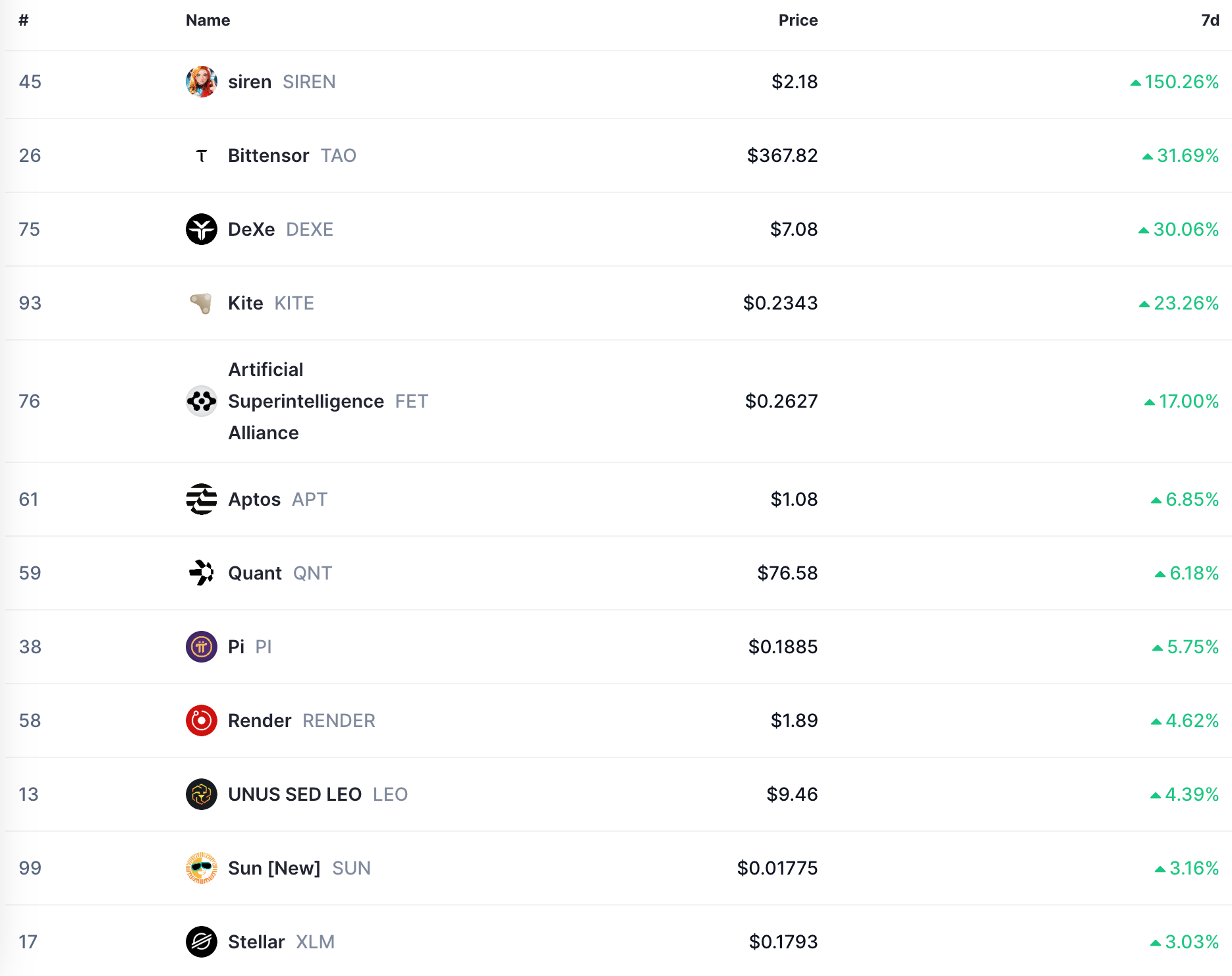
Gainers
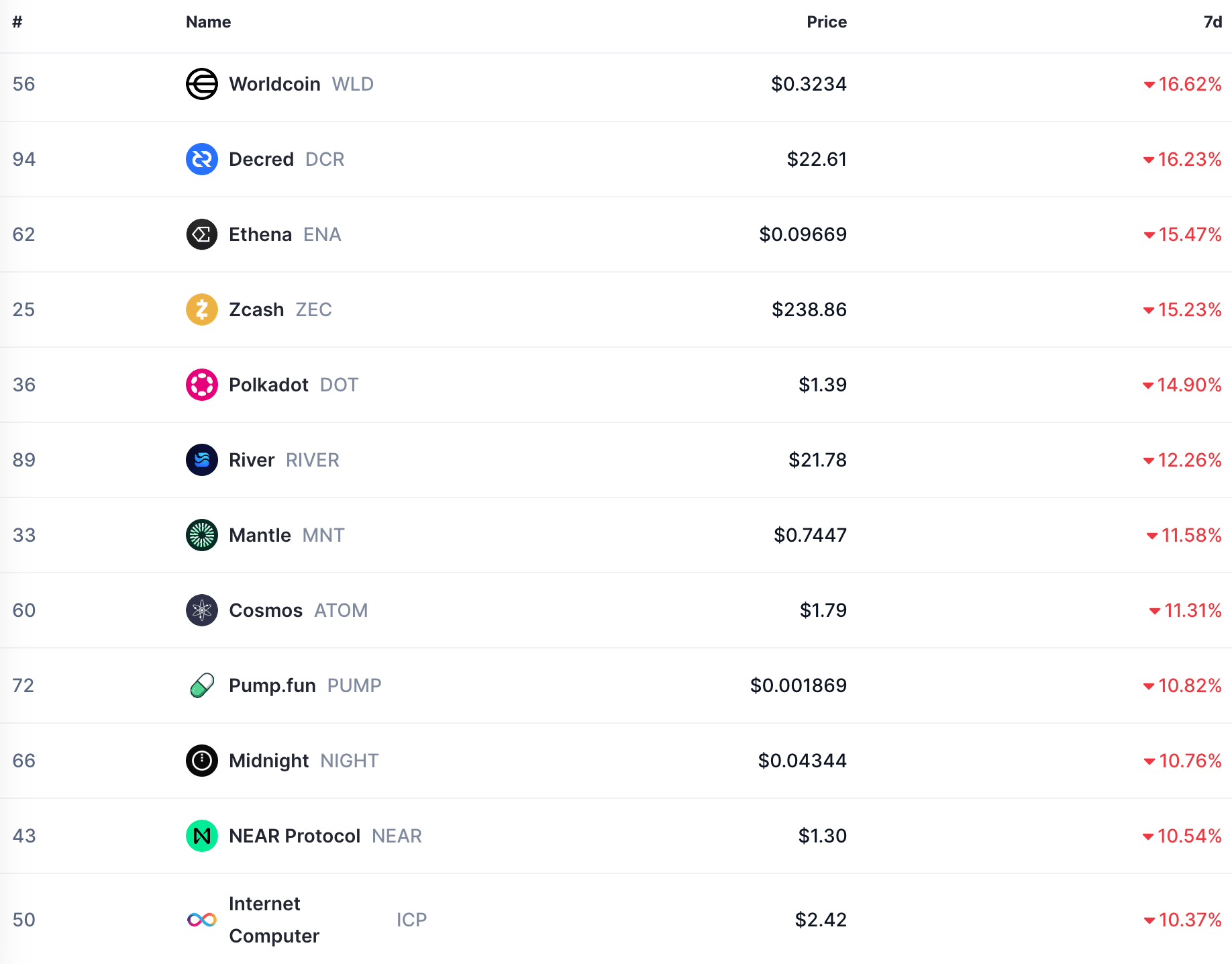
Losers
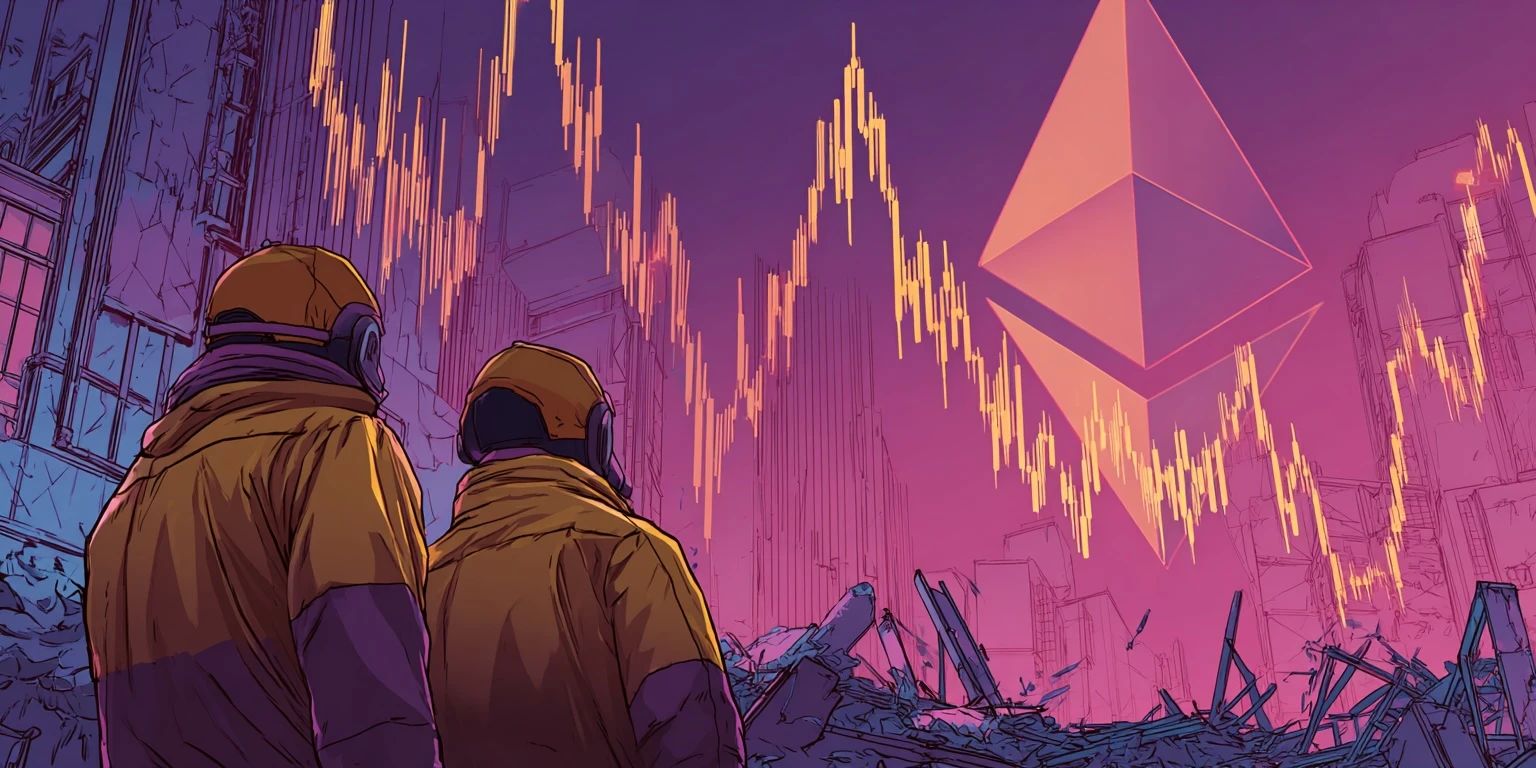
The Degenerate Recovery Trade: Machi Big Brother Is $15m Long ETH After a $75m Drawdown
Less than a month after we documented one of the most painful whale drawdowns of the cycle, Machi Big Brother is back, and he has not changed a single thing.
Blockchain intelligence platform Arkham Intelligence posted on April 1, 2026, that Machi's perpetuals account had recovered to seven figures, with the trader currently holding a $15.3m long position in ETH perps. The headline on the post reads bluntly: "MACHI BIG BROTHER IS BACK AT $1 MILLION."
The backstory, in brief
In early March, we reported that Arkham's entity-level tracking of Machi's wallets showed "substantial realised and unrealised losses" over a six-month period, placing him "among the biggest visible whale drawdowns of 2026 so far".
The breakdown was ugly: multiple drawdowns exceeding eight figures, poor timing across high-volatility altcoin rotations, rapid turnover in speculative positions. At his peak, he was up almost $45m. By the time we wrote that piece, he had surrendered more than $75m.
Our article noted that in 2026's "more volatile and liquidity-constrained environment," Machi's trademark strategy, perpetual futures, meme coins, illiquid altcoin launches, and short-term rotational trades, had backfired badly. Bitcoin had retraced from cycle highs, altcoins had underperformed, DeFi liquidity had thinned, and funding rates had flipped repeatedly.
That was less than four weeks ago. The market conditions have not materially changed. But the position size is straight back to eye-watering.
The maths that should give you pause
Arkham's update is clear on the numbers: roughly $1m in equity on the perps account, with $15.3m notional long ETH. That is effective leverage of around 15x on one of crypto's most volatile major assets.
Work through what that means in practice:
A 7% drop in ETH from entry wipes out the entire equity buffer on paper, before liquidation engines, slippage, or funding costs are even taken into account.
A 10% move against the position produces a theoretical $1.53m loss against $1m of equity, a complete liquidation event.
Even a 5% adverse move eats through roughly three-quarters of the account.
Crucially, those are not rare or extreme scenarios. ETH routinely moves 5–10% intraday on no particular catalyst. At 15x, "normal" volatility becomes an existential threat to the account on any given trading session.
The upside mirror of those numbers is equally seductive: a clean 10% ETH rally theoretically more than doubles the account. That is exactly the kind of asymmetric narrative that makes recovery trades so psychologically compelling, and structurally so dangerous.
Why the recovery trade is the riskiest trade
There is a well-documented pattern in trading psychology that sits at the core of what is playing out here: the desperate attempt to "get it back" with size after a catastrophic loss. It has a clinical name in the gambling literature, chasing, and it has killed more bankrolls than any single bad trade.
Three compounding factors make it especially lethal in this context:
Path dependency. After a drawdown of $75m-plus, the question is no longer about long-run edge. It is about the exact sequence of returns hitting a drastically reduced bankroll. A strategy that was sustainable with a $50m cushion can destroy a $1m account in days before any theoretical edge plays out. The maths of ruin do not care about your peak PnL.
Variance versus equity. Running $15.3m notional against $1m equity means that routine crypto volatility, the kind that registers as noise on a daily chart, translates to 50–100% account-level swings on an intraday basis. You are no longer managing a position; you are surviving a distribution.
Liquidity and exit risk. Our earlier piece highlighted that Machi's 2026 losses were partly driven by the broader thinning of DeFi and altcoin liquidity. That structural problem has not gone away. If a $15.3m ETH long needs to be exited in a fast-moving market, the order book will thin precisely when depth is needed most. "Just get flat" becomes a multi-million dollar execution problem.
All three effects are amplified post-drawdown. Your cushion is thinner, volatility is unchanged, and liquidity is no friendlier than during the losses that got you here.
The scoreboard problem
Part of what makes this story distinctive is that Machi's every move is publicly visible. As we noted, when his trades go well, he is read as a "smart money" signal; when they go poorly, "the losses become public case studies in whale risk management".
Arkham's tweet cheerleading the return to seven figures is a reminder that on-chain transparency creates its own feedback loop. The entire arc, from near $45m up, to $75m down, to a giddy "HE'S BACK" post at $1m, plays out in public, in real time, with thousands of traders watching and, in some cases, mirroring positions.
That public scoreboard pressure is not incidental. When your drawdown is a headline and your recovery is a tweet, there is a powerful incentive to go big and go fast rather than grind back methodically with smaller size over months. It turns trading into performance, and performance into leverage.
This is not a redemption arc. Not yet.
Arkham's framing asks the obvious question: "Will he make it back?" It is a good hook. But the honest answer, based on the numbers, is that Machi is currently at the most dangerous point in his entire saga, not the most promising.
Our first article's closing observation still applies: "on-chain transparency exposes both wins and losses" and "high-leverage trading cuts both ways". A $15.3m ETH long against a $1m account is not a recovery strategy. It is a binary bet: either ETH moves cleanly in his favour, and the narrative writes itself, or a single volatile session sends the account balance back to zero, and the whole cycle begins again.
For retail traders watching this unfold, particularly those tempted to read the "BACK AT $1 MILLION" headline as a bullish signal, the real lesson is simpler and harsher than any redemption story. Whales like Machi have external capital, income streams, and the ability to reload. Most traders copying aggressive post-drawdown leverage do not.
The degenerate recovery trade is not a strategy. It is the last move before the account goes dark.
Markets Rally on Trump’s Iran Comments as Bitcoin Stays Unusually Stable
Stocks and oil surged after Trump hinted at a possible end to the Iran war, while Bitcoin remained steady, highlighting a growing divergence between crypto and traditional markets.

Global markets jumped after Donald Trump signalled a potential end to the Iran conflict, but Bitcoin barely moved.
Asian equities posted their strongest session in months, and US futures surged after the president said he would deliver an “important update” on Iran, adding that the war could end within two to three weeks. The comments injected fresh optimism into risk markets that have been whipsawed by conflicting headlines throughout the conflict.
At the same time, oil prices rebounded after reports that the United Arab Emirates is preparing to support US-led efforts to forcibly reopen the Strait of Hormuz, a move that could mark the first direct involvement of a Gulf state as a combatant.
Equities Surge on Optimism
The reaction in equities was immediate and aggressive. The MSCI Asia Pacific Index jumped 4%, its best session since the conflict began, with gains heavily concentrated in technology stocks. Companies such as Samsung and SK Hynix led the move, each rising more than 9% as sentiment flipped sharply.
In the US, S&P 500 futures also climbed, with the index recording its strongest daily performance since May. The rally reflects how sensitive equities have become to any indication that the conflict may de-escalate, even if those signals remain uncertain.
Trump’s announcement of a national address scheduled for Wednesday evening has now become the next focal point for markets, with investors looking for clarity on whether the rhetoric will translate into a concrete path toward resolution.
Oil Rebounds as Conflict Risk Persists
Despite the optimism in equities, oil markets continue to price in ongoing disruption. Brent crude moved back above $105 after briefly pulling back, supported by reports that the UAE may assist in reopening Hormuz by force.
That development underscores the underlying tension in markets. Even as political rhetoric leans toward de-escalation, the operational reality suggests the conflict could still broaden before it resolves.
Hope is driving the rally, but risk hasn’t gone anywhere.
Bitcoin Holds Steady
In contrast to equities, crypto markets showed only a muted reaction. Bitcoin traded around $67.9k, up just 0.2% over 24 hours, while Ether rose 1.6% to $2.1k. Other major assets posted similarly modest gains, with XRP, BNB and Dogecoin all edging slightly higher, while Solana lagged and extended its weekly decline.
This relative stability has become a defining feature of the current market environment. While equities swing sharply on geopolitical headlines, Bitcoin has spent weeks consolidating between roughly $65k and $73k.
The divergence is becoming hard to ignore.
New Institutional Flows Add Support
Beyond geopolitics, there are early signs of structural support building for Bitcoin. Morgan Stanley has received approval for a new bitcoin ETF with a fee of just 14 basis points, undercutting much of the competition and opening access to a network of around 16,000 financial advisors managing $6.2tn in assets.
This represents a meaningful expansion in distribution, particularly given that many of these channels have not previously had direct exposure to bitcoin ETFs.
Market participants are also watching continued corporate accumulation strategies, including ongoing bitcoin purchases funded through preferred equity structures, as an additional source of demand.
A Fragile Rally
For now, markets are balancing two competing forces.
On one side, optimism around a potential resolution to the Iran conflict is driving risk-on positioning. On the other hand, the lack of concrete developments, combined with ongoing military escalation, continues to limit conviction.
Gold’s recent performance highlights that tension. Despite the active conflict, the metal has struggled, posting one of its worst monthly declines in years, even as geopolitical risk remains elevated.
The next move now hinges on Trump’s upcoming address. If it provides a credible path toward de-escalation, the current rally could extend. If not, markets may once again reverse as quickly as they moved higher.
The Bottom Line
Markets are reacting to expectations, not outcomes.
Equities and oil are moving sharply on every headline, while Bitcoin remains relatively stable, reflecting a market that is consolidating rather than chasing short-term narratives.
Whether this rally holds will depend on one thing: clarity.
Until then, volatility remains the only constant.
What Makes a Good Crypto Card in 2026
Crypto cards have been around for a while, but in 2026, the good ones feel very different from the early versions. Back then, using a crypto card often meant friction, confusing fees, limited acceptance, or an experience that reminded you a little too much that you were “using crypto.”

Today, a good crypto card shouldn’t feel like a crypto product at all. It should feel like a great payment card that just happens to be powered by crypto in the background.
So what actually makes a crypto card worth using in 2026? Here’s what matters–and what doesn’t.
It Has to Be Easy to Use (No Learning Curve)
The biggest sign of a good crypto card is how little you have to think about it.
You shouldn’t need to:
👉 Manually convert assets before every purchase
👉 Worry about price swings while you’re checking out
👉 Explain anything to a cashier or merchant
A good crypto card handles all of that automatically. You tap, the payment goes through, and you move on with your day. The crypto part stays invisible unless you actively want to interact with it.
If it feels complicated, it’s not built for everyday use.
It Should Support Stablecoins for Spending
In 2026, most people aren’t spending volatile crypto like Bitcoin day to day. They’re spending stablecoins like USDC or USDT–digital dollars designed to stay steady in value.
A good crypto card:
👉 Lets you spend stablecoins directly
👉 Converts them automatically at checkout
👉 Keeps the value predictable so you always know what you’re spending
This is what makes crypto usable for groceries, travel, subscriptions, and online shopping–not just for trading.
It Has to Work Everywhere You Expect a Card to Work
Nothing kills trust faster than a card that only works “most of the time.”
In 2026, a good crypto card should work:
👉 Online and in-store
👉 With mobile wallets
👉 For subscriptions
👉 For pre-authorisations (hotels, rentals, coworking spaces)
This is where many early crypto cards fell short. They acted like prepaid cards but failed in situations that required credit-style authorisation.
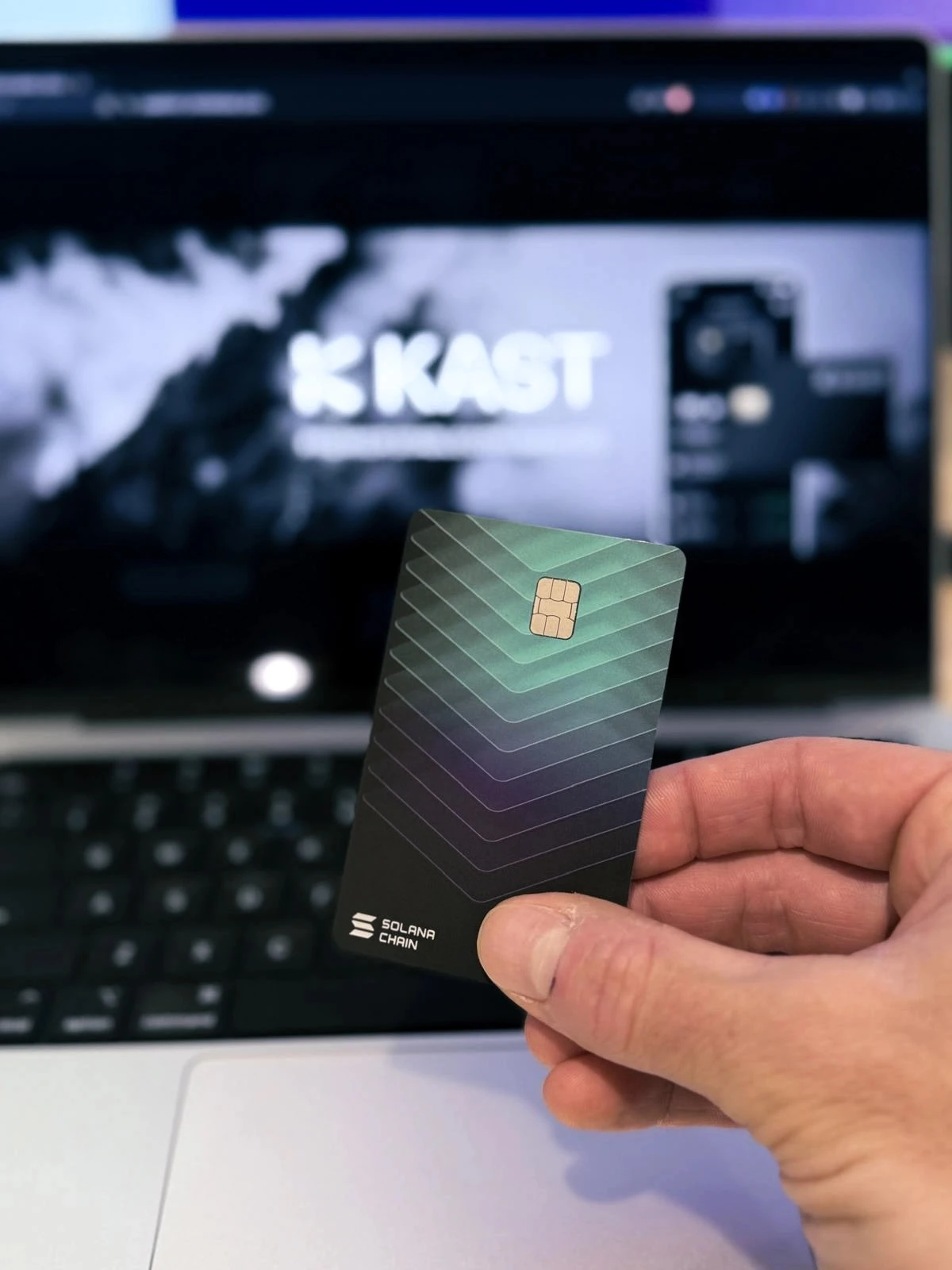
Modern cards like KAST solve this by combining a prepaid balance with credit rails, so the card behaves like a traditional card at checkout–including in places where basic prepaid cards often fail.
To the merchant, it’s just a normal Visa transaction.
It Needs to Be Global by Default
People don’t just spend locally anymore. They shop online across borders, travel frequently, and pay for digital services from all over the world.
A good crypto card:
👉 Works internationally without friction
👉 Handles currency conversion smoothly
👉 Doesn’t panic when you use it in a new country
Crypto-native infrastructure helps here, especially when combined with stablecoins. Spending abroad should feel the same as spending at home.
Rewards Should Feel Simple and Actually Valuable
Rewards matter–but only if they’re easy to understand and easy to earn.
A good crypto card doesn’t bury rewards behind obscure redemption rules. Instead, it rewards everyday spending in a way that feels proportional and fair.
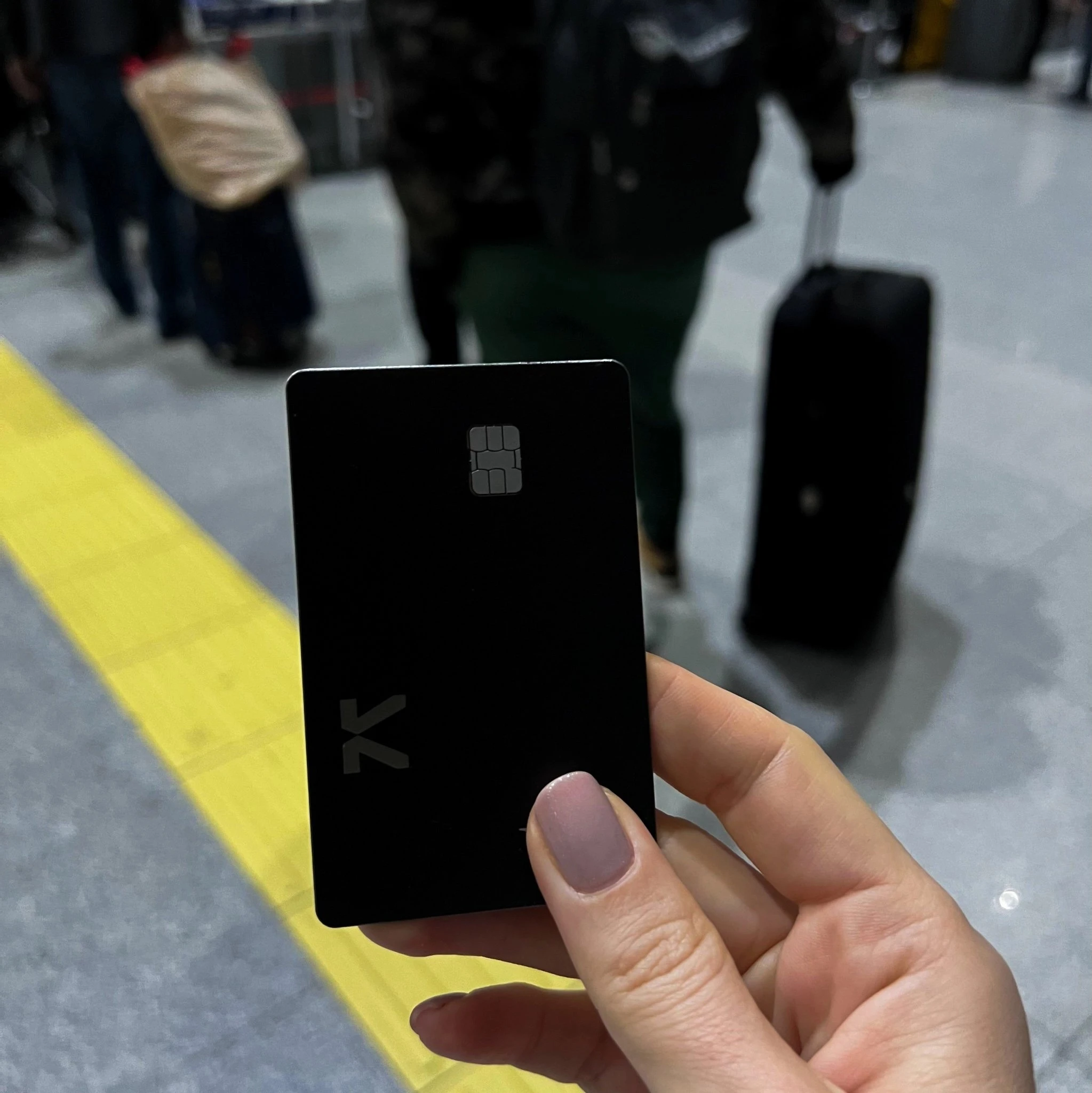
That’s why cards like KAST resonate with users. With earn rates that can reach up to 6 percent back, plus seasonal boosts and promotions, rewards feel meaningful without requiring you to change how you spend.
You use the card. The rewards show up. No puzzles involved.
It Fits Into the Rest of Your Financial Life
A good crypto card doesn’t try to replace everything else you use. It works alongside your bank account, your other cards, and your existing habits.
You might use it:
👉 For everyday spending
👉 For travel
👉 For online shopping
👉 For international payments
And then use other tools for other needs. Flexibility is the point.
KAST is a good example of what a modern crypto card looks like in 2026. It’s built around stablecoin spending, runs on credit rails for better compatibility, works globally, and rewards everyday spending without forcing users into complicated systems.
You don’t need to “be into crypto” to use it. You just need a card that works–and lets crypto quietly do what it does best in the background.
The Takeaway
A good crypto card in 2026 isn’t about buzzwords or features built for power users. It’s about reliability, simplicity, and flexibility. The right card feels easy from day one, works everywhere you expect it to, keeps spending predictable, and rewards everyday purchases without getting in your way.
The best crypto cards don’t make you think about crypto at all. They just make paying easier, and that’s exactly what people are looking for now. Discover how KAST makes everyday spending feel that simple.


We’re excited to offer you a massive 35% discount!
What You Unlock:
- Strategies from top crypto experts
- Exclusive access to market insights, guides, and top tips
- Tools to maximise your crypto savings and investments
- A supportive community of like-minded crypto enthusiasts
- Access to our community Discord
Use the code 35OFF at checkout to claim your discount and get full access to our community plan for just a fraction of the price.
Secure your spot in the Crypto Saving Expert Community today.
Sponsored by: Stonksy

Stonksy is a momentum identifier that aims to capture expansive market moves before they happen by highlighting the start of potential price shifts. It can be used across all markets, including crypto, stocks, indices, commodities, and currencies.
Stonksy is growing in users week-on-week, proving why it aims to become one of the most-used indicators in the industry.
You can get 25% off the annual Stonksy plan with code TMG25, taking the price down to just £749.25 for an entire year of full access. Sign up here.
Find examples of Stonksy indications posted to the X every day: @stonksyio and learn how to use Stonksy and how it can benefit your trading system on the YouTube channel, with daily livestreams at 12:00 UTC.
This Newsletter is strictly for informational purposes only; the content is generic and has not been tailored in any way. Crypto Saving Expert UAB (“CSE”) is not providing, and should not be interpreted as providing, any form of offer of any currency, security, financial instrument or digital asset, or investment advice, recommendations or strategy. The content of this Newsletter is not intended to replace your own research with regard to any assets, products or services, and any action taken on the basis of this material is entirely at your own risk. CSE neither accepts nor assumes any liability or responsibility for any loss or damage arising out of, or in any way connected to, the Newsletter content. Cryptocurrencies and digital assets may be unregulated in your jurisdiction, any profits may be subject to tax and the value of any investment could fall.
If you click on a link within this Newsletter to go through to a provider, we may get paid. This usually only happens if you get a product/use a service from it. This is what helps fund CSE and keeps the majority of our content free to use. Two crucial things you should know about this, however: a) this never impacts our editorial recommendations, if something is included, it is because we independently rate it as the best; and b) you will always get as good a deal, or better, than if you went direct. For full details on how CSE is funded, please click here.
CSE collects, processes and stores certain data. Such data may be shared with CSE’s wholly owned subsidiary company, Crypto Saving Expert Limited. Please note that by submitting information about yourself to CSE you are consenting to such use. For full details on our collection, processing and storage of data, together with your rights in relation thereto, please consult our Privacy Statement here.