- Crypto Saving Expert's Newsletter
- Posts
- Crypto Saving Expert Newsletter - Issue 190
Crypto Saving Expert Newsletter - Issue 190
GM.
Bitcoin is consolidating as the market waits for its next major move, but altcoins are starting to steal the spotlight.
After weeks of Bitcoin-led momentum, we are now seeing large caps begin to break out one by one, with SOL, TON and SUI all making strong moves over the past week.
Sentiment remains cautious, with the Fear and Greed Index still sitting in Fear, showing the market is not fully convinced just yet.
Macro data also returns this week, meaning volatility could pick up quickly.
Let’s break it down.👇
Table of Contents
Most traders don’t struggle because of the market…
they struggle because they don’t have a clear system.
If you’re either:
• Just getting started
• Or trading but not seeing consistency yet
we’ve been building something for you.
The TMG Inner Circle is a focused environment designed to help you develop a structured, repeatable approach to trading, using the same frameworks we use ourselves.
Inside, we focus on:
• Clear strategies you can actually follow
• Breaking down real market conditions
• Helping you build consistency over time
If you’d like to join, you can apply here:
👉 TypeForm
And if you want to understand it a bit more first, this short overview walks through everything:
👉 HERE
Jordan
(That Martini Guy)

Sponsored by: Yubit

Why Yubit?
All-In-One Trading Platform: Trade crypto futures, gold, silver, oil, forex, indices and stocks from one account.
500+ Trading Pairs: Access a wide range of markets, from major crypto assets to meme coins and selected TradFi products.
TradFi CFD Access: Yubit offers 100+ traditional finance CFD pairs, including markets like Gold, Silver, S&P 500, NAS100, US30, NVIDIA, Tesla and Amazon.
No KYC Required: Create an account quickly and start trading without lengthy verification delays.
Zero Fees on TradFi Products: Trade selected markets such as gold, indices and oil with zero trading fees.
Up to 500x Leverage: Yubit offers high leverage on selected TradFi products, giving active traders more flexibility.
Deep Liquidity: Designed to support fast execution and reduce slippage, especially during volatile market conditions.
Security & Transparency: Yubit highlights a 20,000 ETH protection fund, 100M+ USDT reserve and 1:1 proof of reserves.
Yubit Card: Spend USDT directly worldwide and use crypto profits in real life without needing to off-ramp first.
Yubit Earn: Put idle funds to work with flexible, fixed and auto earn options, with APRs available up to 120%.
Easy On-Ramp: Buy crypto directly inside the platform, making it simple for new users to get started.
Yubit brings crypto and traditional markets together in one simple, non-KYC trading platform. Whether you trade crypto, gold, stocks, oil, forex or indices, Yubit gives you access to multiple markets from one account.
Sign up through our exclusive link below to unlock the latest welcome bonus campaign, VIP fee discounts and access to Crypto + TradFi markets all in one place:
Altcoins Take The Stage

While Bitcoin enters a phase of consolidation altcoins have begun to rally one by one.
Bitcoin
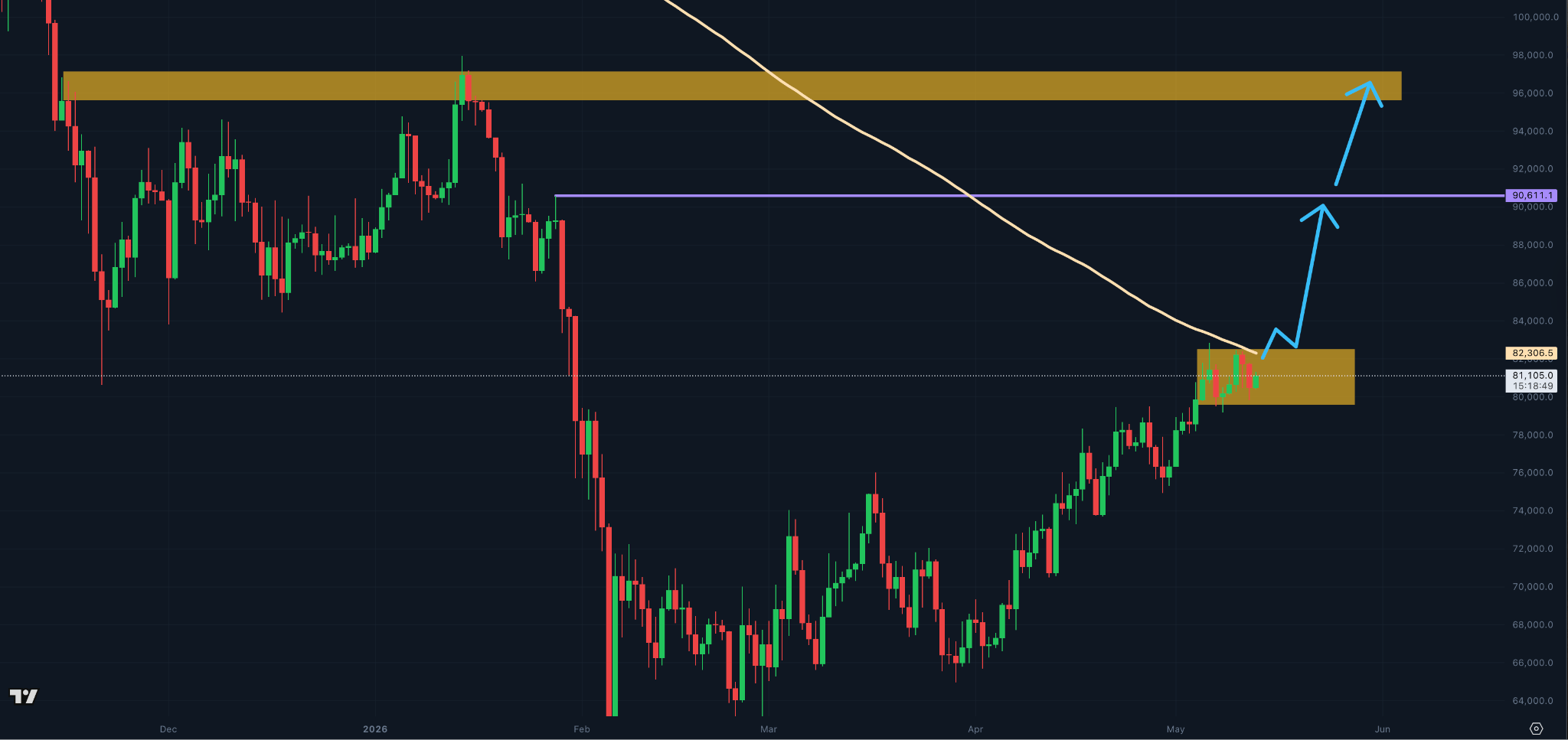
Bitcoin is at a vital spot, as it consolidates in a range but also faces a key marker right above.
While Bitcoin is fighting resistance around $82,500, it also has the 200-daily moving average in its way. This gives Bitcoin an almighty task, but also an opportunity to reclaim the key MA whilst breaking resistance.
If it can do so, it could then begin the climb towards $90,000 with $96,000 also in the crosshairs.
Solana

Solana has finally caught up to Bitcoin and Ethereum, taking the stage last week and providing its breakout move.
This led SOL above the range high, marking an S/R slip, but also saw it come in for a liquidity sweep of the March high at $97.66 and remains 14% up from last week.
From here, Solana has the S/R level to defend if it comes down, but also another level of high liquidity at $106, before the ultimate test of $120.
Ton
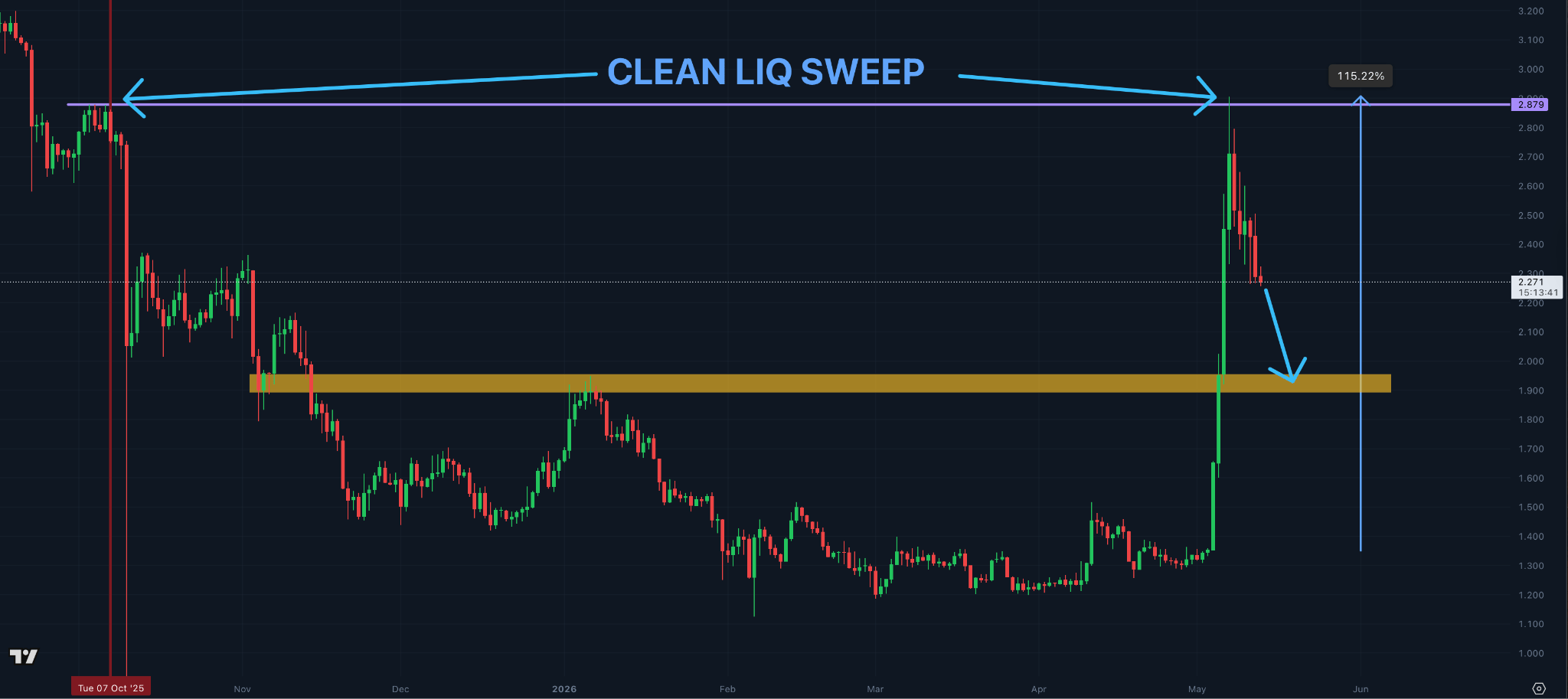
TON has witnessed the greatest strength out of all the large caps, rallying a massive 115% after some bullish news catalysed a huge breakout move.
This led TON to reach levels last seen in October 2025, 7 months ago.
However, the price topped out after a very clean liquidity sweep of the October high and has begun retracing downwards.
If TON drops enough to reach the $1.90 zone, that could be the place in which it attempts to hold before another rally.
SUI
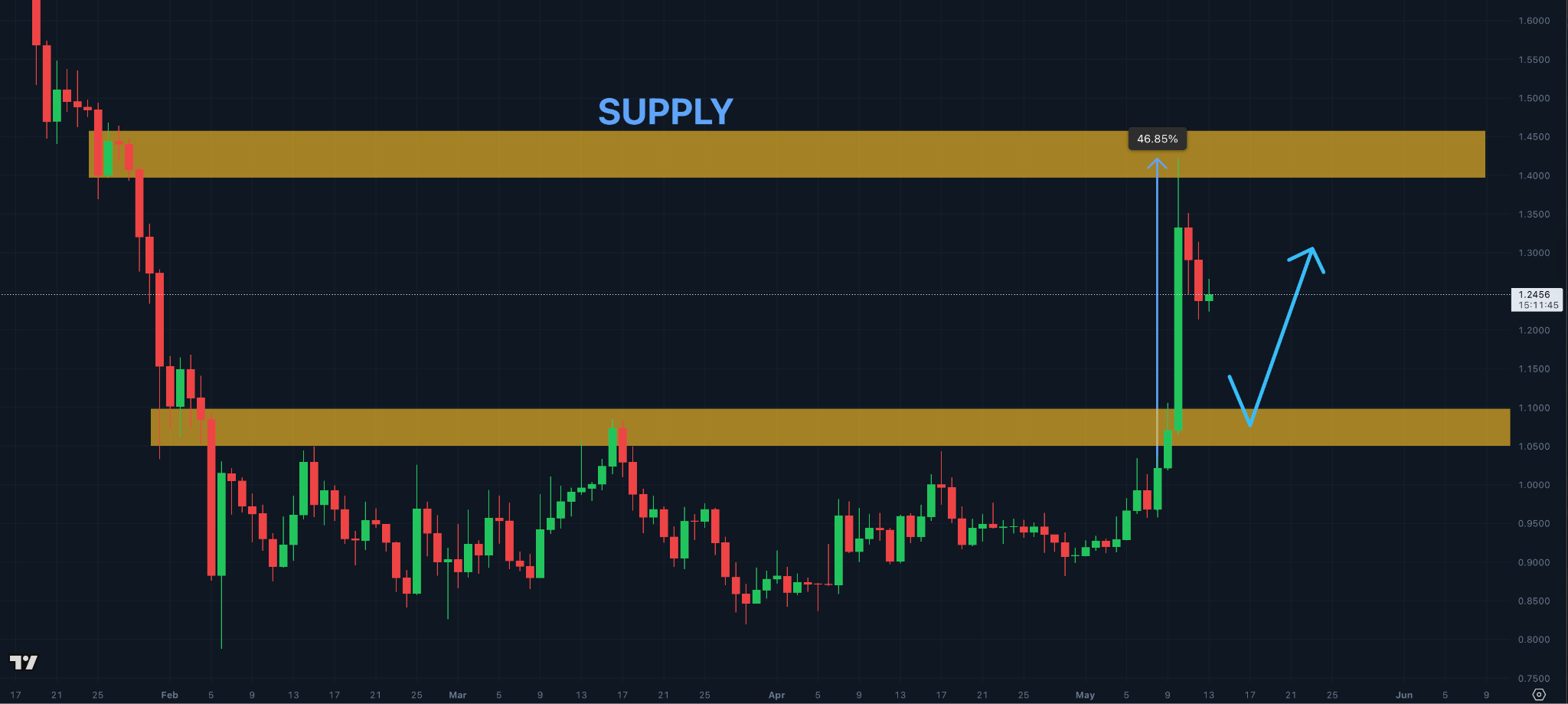
SUI is another of the altcoins that has made a huge move recently, pumping 46% from Friday into Sunday of last week.
The pattern can be observed that once the consolidation range is broken, altcoins are getting some big volume and pushing them onto sizable moves.
Still, SUI appears to have reached a local high and could come down for an S/R test of the previous range high.
The Next One
One altcoin that has started to break out of its range and could be next to run is another large cap.
To find out which one it is, watch this video.
LayerZero
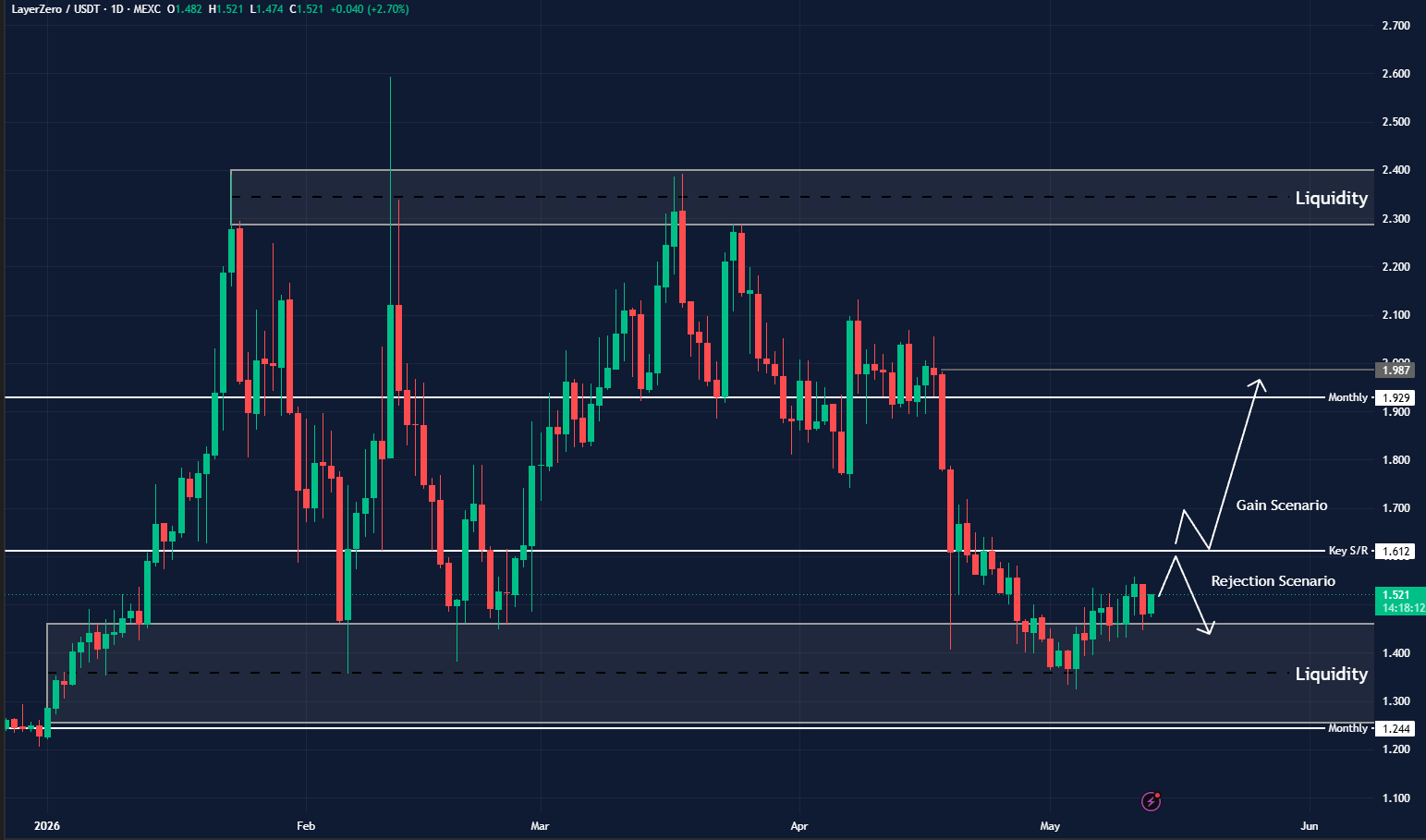
We covered this in a previous newsletter, where we highlighted some scenarios based up on the key S/R levels and liquidity. Since then, the token lost that level and proceeded to grab some of the sell-side liquidity below. The protocol is key for the ecosystem and following the Kelp Dao attack, we are seeing fundamental improvements to their approach.
From a chart perspective, we have seen a sweep of the low, along with a liquidity grab. This has given the fuel to push back up. The key level to gain is the previous S/R level. There are two potential scenarios to play for this dependent on this. Gain the level and an overside retest opportunity is there to $1.929, reject and we could see a push back into the liquidity pocket.
You can trade ZRO on Weex here.
Metis
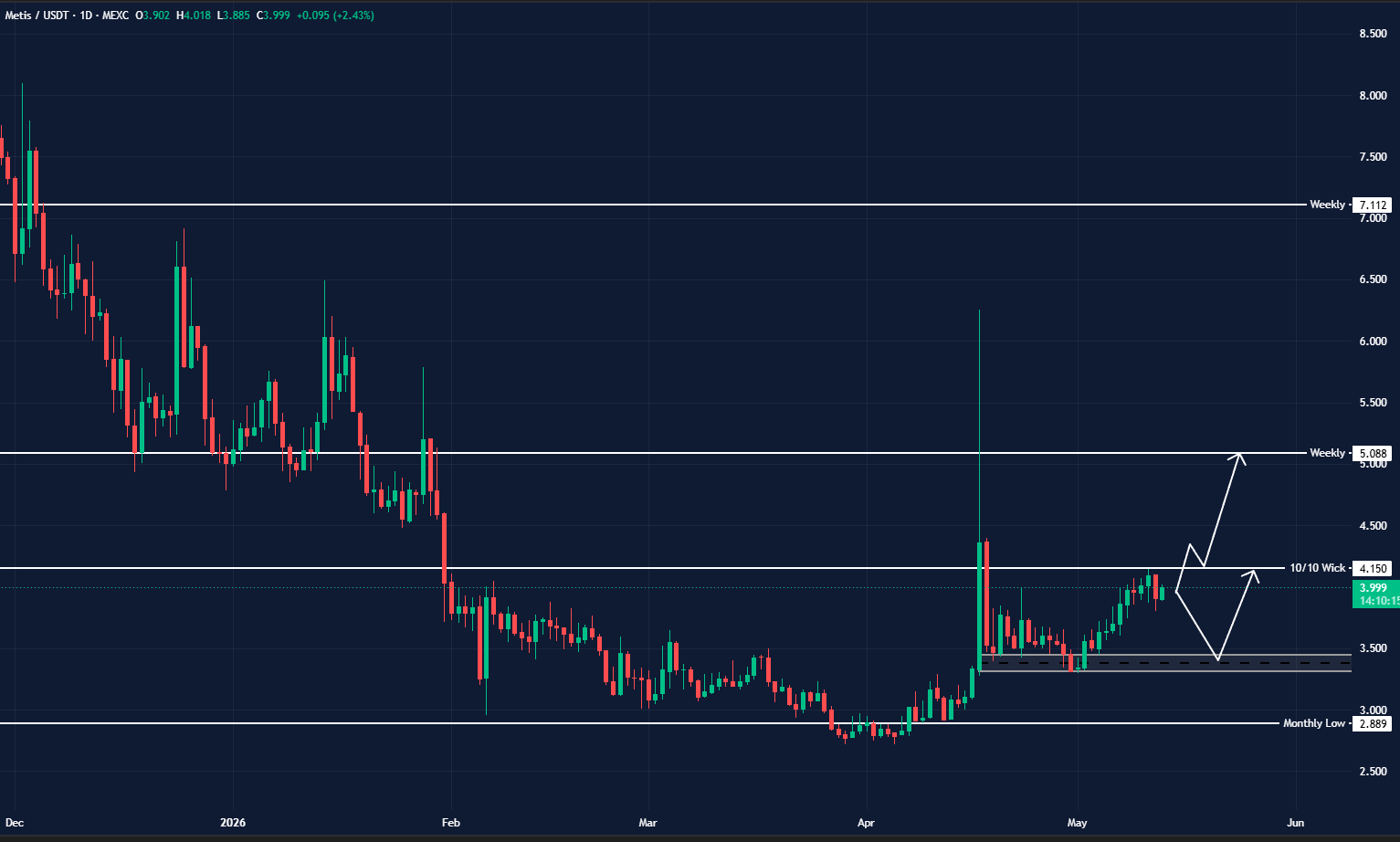
Another altcoin which has caught the eye is METIS. Like most altcoins, this has been badly beaten up, however the structure has changed and is looking more bullish. We’ve seen some key levels gained and it is approaching the October 10 wick.
This has acted as resistance previously and so remains a tough level to gain, however there is a lot of liquidity above. The two scenarios are a gain of this opens up a run to $5.08, or a rejection of the 10/10 wick could send it to the liquidity pocket at $3.32 before a bounce back to retry the level.
You can trade METIS on Yubit here.
Fear And Greed Index

The Fear and Greed Index remained flat from last week, staying within Fear and scoring 42.
It is evident that investors are now awaiting a higher bitcoin price to get excited by the market again.
Important Dates
Wednesday 13 May, 13:30 BST - Producer Price Index (PPI)
The Bureau of Labour Statistics is also responsible for PPI, which measures the average change in commodity prices. Similar to core inflation, PPI removes volatile goods from its findings. The forecast is set at 4.3%, with the previous data at 3.8%.
Thursday 14 May, 13:30 BST - US Retail Sales
The retail sales data is published by the Census Bureau and comprises two pieces of data: the month-over-month (MoM) and the control group.
The MoM figure measures the monthly changes in retail sales, demonstrating consumer confidence to spend money in the economy. This figure is forecast at 0.5%, with the previous figure at 1.7%.
The second figure is the control group, which measures the entire industry sales and estimates the personal consumption expenditures (PCE) for goods. The control group data isn’t forecasted.
Gainers

Losers

Who Is Kevin Warsh? Trump’s New Fed Chair Could Reshape Markets, Rates and Bitcoin
Kevin Warsh has officially been confirmed as the next Federal Reserve chair. Here’s who he is, why markets are nervous, and what it could mean for rates, bonds, stocks and Bitcoin.

Kevin Warsh is now officially the most important central banker in the world.
The US Senate has confirmed Donald Trump’s pick to lead the Federal Reserve, ending months of speculation over who would replace Jerome Powell at one of the most politically sensitive moments in modern Fed history.
And markets immediately understand what this appointment means:
The White House now has far more influence over monetary policy than investors are comfortable with.
Who Is Kevin Warsh?
Warsh isn’t some unknown outsider suddenly appearing from nowhere.
He’s a longtime Wall Street and Federal Reserve figure with deep ties to both finance and Republican politics.
Before becoming Fed chair, Warsh:
Worked at Morgan Stanley
Served as a Federal Reserve governor between 2006 and 2011
Played a key role during the 2008 financial crisis
Became known as an inflation hawk inside the Fed
Historically, Warsh was viewed as someone who prioritised:
Price stability
Market credibility
Tighter monetary discipline
Which makes what happened next so interesting.
Warsh Has Shifted Sharply Toward Trump’s Position
In recent months, Warsh increasingly aligned himself with Donald Trump’s attacks on the Federal Reserve.
Trump has spent much of 2026 publicly pressuring the Fed to cut rates aggressively as the US economy slows and political pressure builds heading deeper into his second term.
Warsh appeared to embrace that position.
In a Wall Street Journal opinion piece last year, he described the Fed’s leadership as:
“Broken.”
He also criticised the institution for extending “far beyond its grasp.”
That language immediately made investors nervous because the Federal Reserve traditionally relies on one thing above all else:
Independence.
Why Markets Are Nervous About This Appointment
The Federal Reserve is supposed to operate separately from politics.
That separation is critical because central banks often need to make unpopular decisions:
Raise interest rates
Slow the economy
Fight inflation
Stabilise the currency
Politicians usually hate those things because voters hate those things.
That’s why Fed independence matters so much.
But critics argue Trump has spent years trying to erode that separation.
The tension reached extreme levels recently after:
Trump publicly attacked Jerome Powell repeatedly
The Justice Department opened a criminal investigation into Fed renovation spending
Republicans threatened procedural blockades tied to the Fed battle
Many Democrats now openly believe Warsh was selected specifically because he will be more politically cooperative with the White House.
Some have even described him as:
Trump’s “sock puppet” at the Fed.
Warsh Says He’ll Be Independent, But Markets Aren’t Fully Convinced
During Senate hearings, Warsh insisted he would act independently.
He repeatedly said he would not allow politics to dictate monetary policy decisions.
But investors remain sceptical.
Partly because of the timing.
And partly because the economic backdrop is becoming increasingly difficult.
The Fed now faces pressure from all directions:
Sticky inflation
High government debt
Weakening growth
Political demands for lower rates
Global geopolitical instability
That combination creates an environment where even small shifts in Fed credibility can move markets aggressively.
What This Means for Stocks, Bonds and Bitcoin
The biggest question now is simple:
Will Warsh cut rates faster than Powell would have?
If the answer is yes, risk assets could initially surge.
Lower rates generally benefit:
Stocks
Crypto
Tech companies
Speculative assets
Bitcoin traders are already watching closely because looser monetary policy historically creates stronger liquidity conditions for crypto markets.
But there’s a second possibility.
If investors believe the Fed is becoming politically compromised, bond markets could react negatively.
That could mean:
Higher Treasury yields
Dollar weakness
Inflation fears returning
Long-term borrowing costs rising
Ironically, aggressive rate cuts designed to stimulate markets could eventually destabilise them if confidence in the Fed weakens too much.
The Powell Era Ends Under a Cloud
Jerome Powell’s departure itself has become controversial.
In one of his final press conferences, Powell issued unusually direct warnings about political interference at the Federal Reserve.
He said the institution was effectively being:
“Battered.”
Powell also warned about the dangers of monetary policy becoming politicised.
Those comments were widely interpreted as indirect criticism of Trump’s pressure campaign.
Now the baton passes to Warsh.
And markets will spend the coming months trying to answer one question above all else:
Is Kevin Warsh truly independent, or is this the beginning of a politically controlled Federal Reserve?
Starmer Under Pressure After Local Election Shock, And Markets Are Starting to Notice
Keir Starmer is facing mounting political pressure after bruising UK local election results, while bond markets and Polymarket traders increasingly question how long he survives.
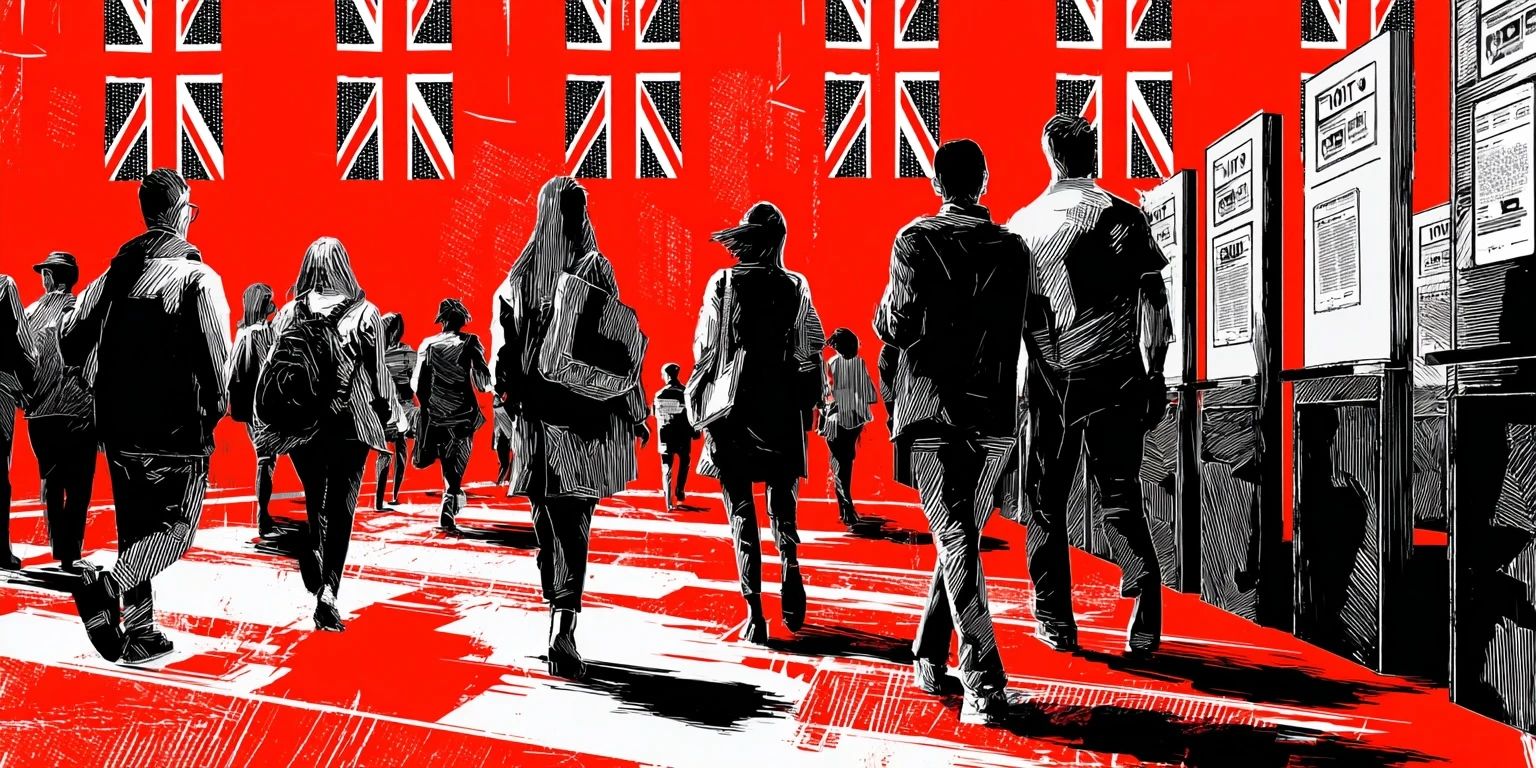
Keir Starmer’s government has run into its first genuine political stress test.
After disappointing local election results across parts of England, Labour suddenly looks far less politically secure than it did just months ago.
And while Westminster focuses on the political fallout, markets are starting to price something else:
Instability.
The pound has weakened.
UK bond yields have pushed higher.
And prediction markets are increasingly betting that Starmer may not survive the year politically intact.
The Local Elections Were Supposed to Be Easy
For Labour, these elections were meant to reinforce dominance.
Instead, they exposed cracks.
Reform UK significantly outperformed expectations in several areas, pulling votes away from both Labour and the Conservatives.
Meanwhile, Labour struggled to generate enthusiasm in parts of the country where the party expected comfortable gains.
The issue isn’t that Labour collapsed.
It’s that:
The anti-establishment vote is growing
Voter frustration remains extremely high
The political environment feels increasingly unstable
And that matters because Starmer’s entire strategy has been built around appearing:
Competent
Predictable
Safe for markets
The local elections disrupted that image.
Polymarket Traders Are Suddenly Betting Against Him
One of the clearest signs of rising uncertainty is coming from prediction markets.
On Polymarket, traders are now aggressively speculating on whether Starmer survives as Prime Minister through various points of 2026.
Current odds imply:
Only an 8% chance Starmer is out by May 15
But a 36% chance he’s gone by June 30
And a striking 67% chance he’s out before the end of the year
That’s an enormous jump in political risk pricing.
Especially for a Prime Minister who entered office promising stability after years of Conservative chaos.
Prediction markets are far from perfect.
But they increasingly act as real-time political sentiment gauges, particularly among younger, online-native traders and macro investors.
And right now, sentiment around Starmer is deteriorating quickly.
The Bond Market Is Starting to Flash Warning Signs Too
The more serious development is happening in the gilt market.
UK government bond yields have started pushing higher again in recent weeks.
Part of that is global:
Higher inflation fears
Oil price spikes
Sticky interest rates
But part of it is domestic political uncertainty.
Bond markets hate instability.
And investors are increasingly questioning whether Labour can maintain fiscal discipline while also dealing with:
Weak growth
Public sector pressure
High borrowing costs
Rising political fragmentation
The UK’s 30-year gilt yield recently climbed toward levels not seen since the 1990’s.
Why Markets Care So Much About Starmer
Starmer’s core pitch to financial markets was simple:
No drama.
After years of Brexit volatility, mini-budget chaos, leadership collapses and fiscal instability, Labour positioned itself as the “boring stability” option.
That’s why markets initially welcomed the government.
But now the political picture is getting murkier.
If Labour starts bleeding support while Reform continues rising, investors begin asking difficult questions:
Can Starmer actually govern effectively?
Will Labour become more populist under pressure?
Could fiscal discipline weaken?
Does the UK enter another cycle of political instability?
Bond markets react to uncertainty long before politicians do.
And right now, uncertainty is growing.
The Bigger Problem: Britain Feels Politically Exhausted
The local elections reinforced something deeper happening in British politics.
Voters increasingly appear frustrated with:
High living costs
Weak wage growth
Housing affordability
Public services
Political stagnation
That creates an environment where anti-establishment movements thrive.
And it explains why Reform UK continues gaining traction despite intense criticism from mainstream parties.
The danger for Labour is that it risks becoming associated with the status quo much faster than expected.
That’s a difficult position for any government entering a slowing economy.
Could Starmer Actually Be Forced Out?
Right now, talk of Starmer immediately losing power is still speculative.
There’s no active leadership challenge.
And Labour remains far ahead nationally compared to the Conservatives.
But politics changes fast.
Especially when:
Markets turn nervous
Economic pressure rises
Public confidence weakens
The important point isn’t whether Starmer definitely leaves.
It’s that:
For the first time, markets are seriously entertaining the possibility.
And once political instability starts getting priced into bonds, currencies and prediction markets simultaneously, it becomes much harder for governments to control the narrative.
TON Has Doubled in Days, But We’ve Seen This Movie Before
TON is exploding again after Pavel Durov announced Telegram will take control of the network. But after the brutal collapse from its previous highs, traders are asking whether this is another hype cycle or the start of something bigger.
TON is flying again.
After months of brutal downside, Toncoin has suddenly come back to life, doubling in just days as traders pile into the latest Telegram-fuelled narrative.
The move started after Telegram founder Pavel Durov announced what he called the network’s “next step”:
Telegram will effectively take control of TON.
The company plans to:
Replace the TON Foundation
Become the network’s largest validator
Slash transaction fees to near-zero
Roll out major upgrades within weeks
And the market absolutely loved it.
TON exploded from roughly $1.20 lows to as high as $2.73 in just two days.
That’s an absurd move for a top-tier network.
But there’s something traders should remember:
The last time TON went vertical like this… it didn’t stop.
Back in 2024, TON ripped from roughly similar levels all the way toward all-time highs above $8.
At the time, many traders called it overheated. Overbought. Unsustainable.
And then it kept going anyway.
Telegram Is Going All-In
The biggest difference this time is that Telegram itself appears to be stepping directly into the driver’s seat.
That’s a huge narrative shift.
TON has always had a strange relationship with Telegram:
Deeply connected culturally
But awkward structurally after regulators forced Telegram to distance itself from the original project years ago
Now that separation seems to be disappearing.
Durov’s message was clear:
Telegram wants TON to become its blockchain layer.
The market hears that and immediately starts pricing in:
Massive user onboarding
Payments
Apps
Gaming
AI infrastructure
Telegram-native economies
Whether all of that actually happens is another question.
But in crypto, narratives move first.
Fundamentals usually arrive later.
The Meme Coin Casino Has Already Arrived
Like every serious crypto rally, the meme coins arrived almost immediately.
TON ecosystem tokens started going completely vertical alongside Toncoin itself.
$DOGS surged over 100%
$UTYA ripped more than 140%
$NOT also posted major gains
That’s usually when things start getting dangerous.
Because once the ecosystem casino opens, price action often detaches completely from reality.
The market stops asking:
“Will this work?”
…and starts asking:
“How high can this go before everyone dumps on each other?”
The Cardano Beef Adds Fuel
Pavel Durov recently shared benchmarking data showing TON now finalises transactions in roughly 0.6 seconds following its Catchain 2.0 upgrade.
That instantly put TON near the top of the Layer 1 speed rankings, while pointing fun at Cardano.
According to the figures shared by Durov:
TON: ~0.6 seconds
Avalanche / BNB / Sui: under 2 seconds
Ethereum: ~13 minutes
Bitcoin: ~1 hour
Cardano: ~24 hours
That last number immediately triggered backlash online.
Because Cardano has spent years marketing itself as one of crypto’s most academically rigorous and technically advanced blockchains.
TON supporters are now using the finality rankings to argue that speed and real-world usability matter more than peer-reviewed theory.
And with TON directly connected to Telegram’s enormous user base, the comparison suddenly feels far more serious than just another crypto Twitter argument.
At the same time, critics argue TON’s speed comes with tradeoffs.
Durov also confirmed Telegram is now TON’s largest validator after staking roughly 2.2m TON.
That has intensified concerns that TON is becoming increasingly centralised around Telegram itself.
So the debate now looks something like this:
Cardano supporters argue decentralisation and security matter most
TON supporters argue users care about speed, scale and actual adoption
Others have called the numbers straight up made up and wrong
So who really knows.
The Big Question: Is This Sustainable?
This is where things get interesting.
Because TON’s rally right now feels extremely narrative-driven.
And crypto traders have seen this exact setup countless times:
Major announcement
Vertical price movement
Meme coin mania
Retail FOMO
Then eventually… reality
Some analysts are already warning that TON looks overheated in the short term.
Momentum indicators are flashing overbought signals, and traders are likely sitting on huge profits after the near-100% move.
That creates risk of a violent pullback once the actual upgrades go live.
Crypto markets love to:
Buy the rumour. Sell the launch.
We’ve seen it with Ethereum upgrades.
We’ve seen it with ETF approvals.
We’ve seen it with Solana countless times.
TON could easily follow the same pattern.
But There’s One Thing Bears Keep Forgetting
Here’s the problem with fading TON too aggressively:
Telegram’s scale is real.
Most crypto ecosystems spend billions trying to acquire users.
Telegram already has them.
If even a fraction of Telegram’s user base starts interacting with TON-native apps, wallets, payments or AI infrastructure, the network could scale extremely quickly.
Durov’s long-term vision also appears far bigger than simple payments.
Telegram has already announced Cocoon, its decentralised AI compute network built on TON, alongside broader plans around GPU infrastructure and AI services.
That gives TON exposure to two of the biggest narratives in crypto right now:
Consumer adoption
AI infrastructure
That combination is powerful.
Final Thoughts
TON feels like one of the market’s biggest “love it or hate it” trades right now.
The bulls see:
Telegram integration
Massive distribution
Near-zero fees
AI expansion
A network still down massively from all-time highs
The bears see:
Narrative mania
Overbought momentum
Increasing centralisation
Meme coin speculation
A rally running way too far too fast
And honestly?
Both sides probably have a point.
But crypto has a habit of staying irrational far longer than people expect.
The last time TON went vertical, people called the top early the entire way up.
This time?
Nobody really knows whether this is the start of another monster run… or just another explosive hype cycle waiting to unwind.


We’re excited to offer you a massive 35% discount!
What You Unlock:
- Strategies from top crypto experts
- Exclusive access to market insights, guides, and top tips
- Tools to maximise your crypto savings and investments
- A supportive community of like-minded crypto enthusiasts
- Access to our community Discord
Use the code 35OFF at checkout to claim your discount and get full access to our community plan for just a fraction of the price.
Secure your spot in the Crypto Saving Expert Community today.
Sponsored by: Stonksy

Stonksy is a momentum identifier that aims to capture expansive market moves before they happen by highlighting the start of potential price shifts. It can be used across all markets, including crypto, stocks, indices, commodities, and currencies.
Stonksy is growing in users week-on-week, proving why it aims to become one of the most-used indicators in the industry.
You can get 25% off the annual Stonksy plan with code TMG25, taking the price down to just £749.25 for an entire year of full access. Sign up here.
Find examples of Stonksy indications posted to the X every day: @stonksyio and learn how to use Stonksy and how it can benefit your trading system on the YouTube channel, with daily livestreams at 12:00 UTC.
This Newsletter is strictly for informational purposes only; the content is generic and has not been tailored in any way. Crypto Saving Expert UAB (“CSE”) is not providing, and should not be interpreted as providing, any form of offer of any currency, security, financial instrument or digital asset, or investment advice, recommendations or strategy. The content of this Newsletter is not intended to replace your own research with regard to any assets, products or services, and any action taken on the basis of this material is entirely at your own risk. CSE neither accepts nor assumes any liability or responsibility for any loss or damage arising out of, or in any way connected to, the Newsletter content. Cryptocurrencies and digital assets may be unregulated in your jurisdiction, any profits may be subject to tax and the value of any investment could fall.
If you click on a link within this Newsletter to go through to a provider, we may get paid. This usually only happens if you get a product/use a service from it. This is what helps fund CSE and keeps the majority of our content free to use. Two crucial things you should know about this, however: a) this never impacts our editorial recommendations, if something is included, it is because we independently rate it as the best; and b) you will always get as good a deal, or better, than if you went direct. For full details on how CSE is funded, please click here.
CSE collects, processes and stores certain data. Such data may be shared with CSE’s wholly owned subsidiary company, Crypto Saving Expert Limited. Please note that by submitting information about yourself to CSE you are consenting to such use. For full details on our collection, processing and storage of data, together with your rights in relation thereto, please consult our Privacy Statement here.